
Insights
Product, design, AI, and engineering perspectives from our team.

Quantifying Technical Debt: A Business Case Your Board Approves
Boards fund reduced risk, protected revenue, and faster time to market — not "code quality." This article shows how to translate technical debt into cost of delay, risk exposure, and opportunity cost, with a board-ready register template.

SRE for Scale-Ups: Reducing Incidents Without a Team
Reliability incidents rising as you scale don't require a dedicated SRE team to fix — they require the right practices. Here's how CTOs can adopt error budgets, incident response, and on-call rotations with existing engineers.

Platform Engineering for Scale-Ups Without a Dedicated Team
Growing engineering teams don't need a dedicated platform team to get the benefits of platform engineering. This guide covers internal developer platform (IDP) patterns and golden paths that reduce cognitive load without a big hiring investment.

Legacy System Modernisation: A Phased Roadmap
Legacy system modernisation doesn't have to mean choosing between a risky big-bang rewrite and years of technical debt. This guide sets out a phased, strangler-fig roadmap with funding gates, risk controls, and how AI-assisted code understanding changes the economics of the assessment phase.

Application Modernisation in Australia: The Complete 2025 Guide
A practical guide to application modernisation for Australian engineering leaders — covering patterns like strangler fig and re-architecture, architecture maturity trade-offs, and Australian-specific context including the Essential Eight and Hosting Certification Framework.

Technical Debt and AI: Why You Can't Build on a Broken Foundation
Layering AI onto systems carrying significant technical debt doesn't hide the debt — it amplifies it. This post covers how to audit the specific foundations your AI use case depends on, prioritise remediation without a full rewrite, and sequence modernisation and AI adoption so your investment actually reaches production.
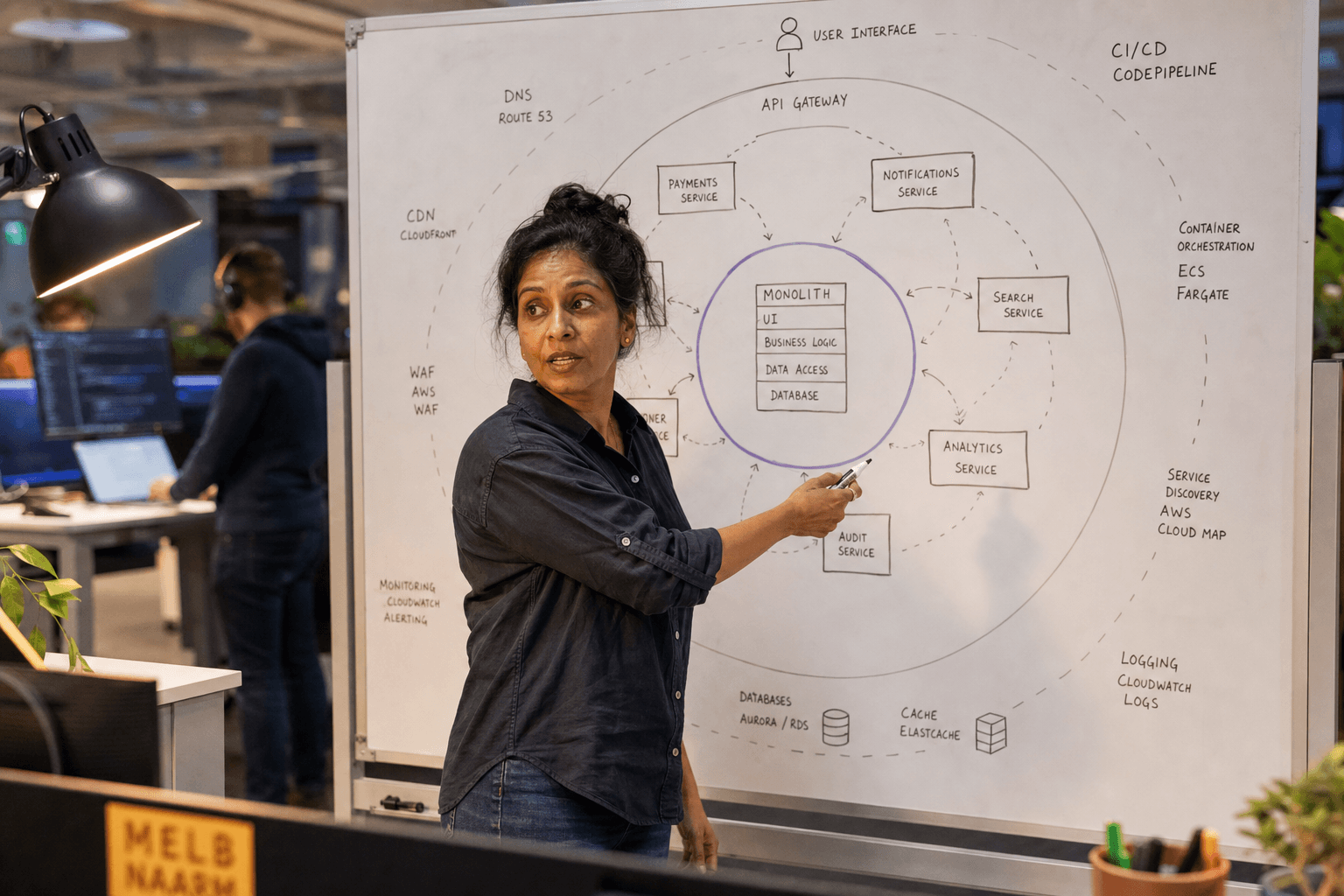
Application Modernisation: The Strangler-Fig Pattern in Practice
Rewriting a legacy monolith from scratch is high-risk and rarely necessary. The strangler-fig pattern lets Australian engineering teams modernise .NET and Java applications incrementally — shipping value continuously while reducing risk. Here is how it works in practice.

How to Evaluate Software Architecture: A Non-Technical Guide
Learn how to assess your software architecture's health without technical expertise. Understand key indicators of architectural problems and the right questions to ask your engineering team.

Application Modernisation Services Australia: Mid-Market Guide
Application modernisation transforms legacy systems into scalable, maintainable platforms that support business growth. This comprehensive guide covers strategic approaches, technical considerations, and practical steps for Australian mid-market companies looking to modernise their applications.