
Insights
Product, design, AI, and engineering perspectives from our team.

ML Proof of Concept to Production: Why Most Stall
Most ML proof of concepts never reach production — not because the model is wrong, but because reproducibility, deployment, monitoring, evaluation, versioning, and lineage were never built. Here's why POCs stall and what a realistic path to production looks like.

AI Incident Response: What to Do When Your Model Fails in Production
When an AI model fails in production, the failure is often silent — no error code, just degrading outputs. This guide is a practical incident response playbook for ML and LLM systems: detection, severity classification, rollback, stakeholder communication, and post-incident review, built for technical leaders who need to extend their existing incident processes to cover AI-specific failure modes.

Structured Outputs and Function Calling: Making LLMs Reliable
Structured outputs and function calling are the mechanisms that make LLMs viable in production workflows — but reliable implementation requires deliberate schema design, validation layers, and observability from the start. This guide covers how to use both patterns effectively, when to choose each, and the failure modes that catch teams off-guard at scale.

AI Inference Optimisation: A Production Decision Guide
Shipping a model is the beginning, not the end. Once an AI feature is live, inference cost and latency become real engineering problems that compound at scale. This guide explains the key optimisation levers available to technical leaders — and how to choose between them.

Multi-Model Routing: Cut LLM Costs Without Sacrificing Quality
Multi-model routing sends each AI request to the cheapest model capable of handling it well, rather than routing everything through a frontier model. Combined with semantic caching and fallback chains, it is one of the most effective ways to control LLM costs in production without degrading quality. This post covers the core patterns and what a practical production architecture looks like.
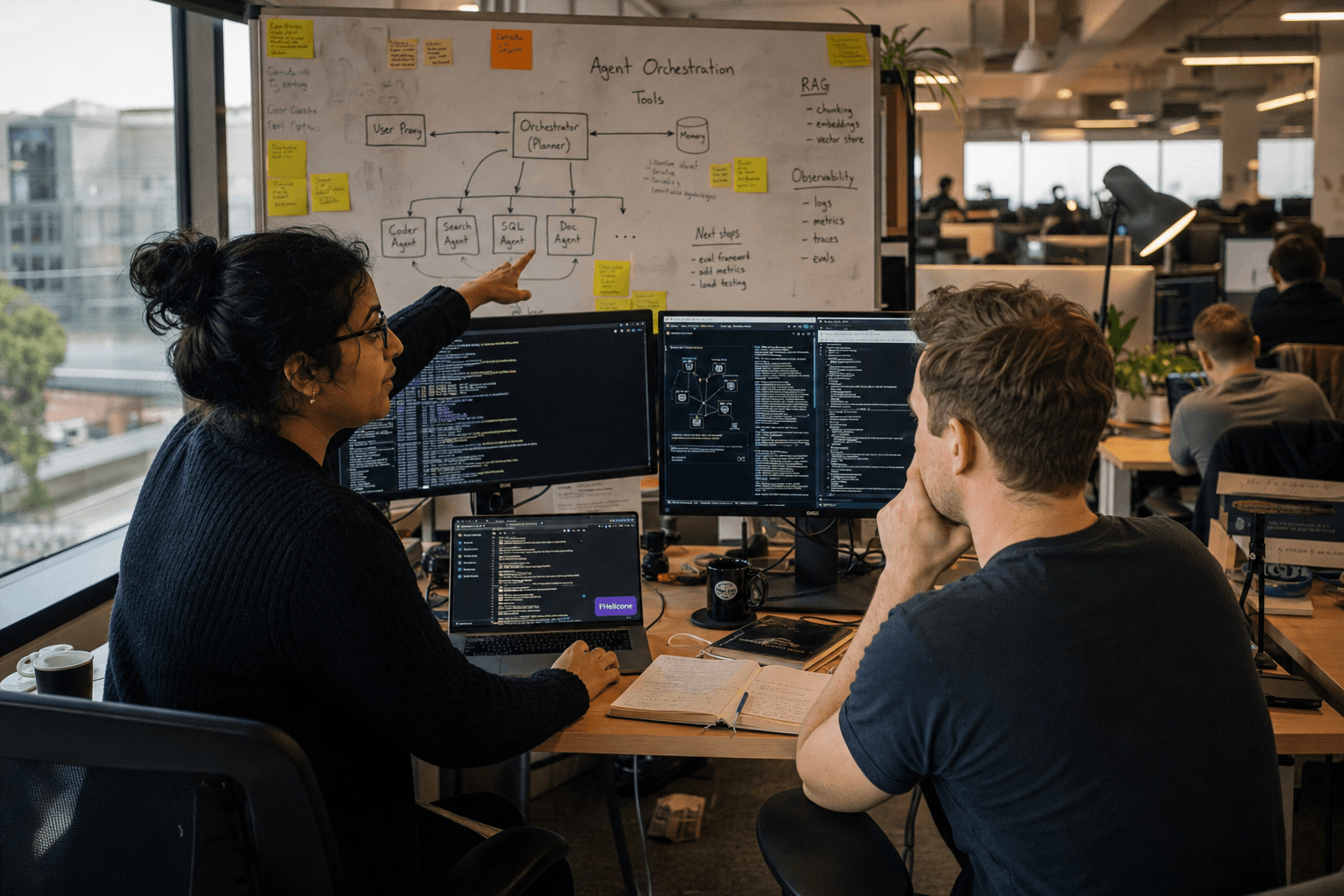
AI Agents in Production: Lessons from Real Enterprise Deployments
Enterprise AI agents require careful orchestration, robust failure handling, and strategic cost management to work reliably at scale. Here's what we've learned from real deployments.
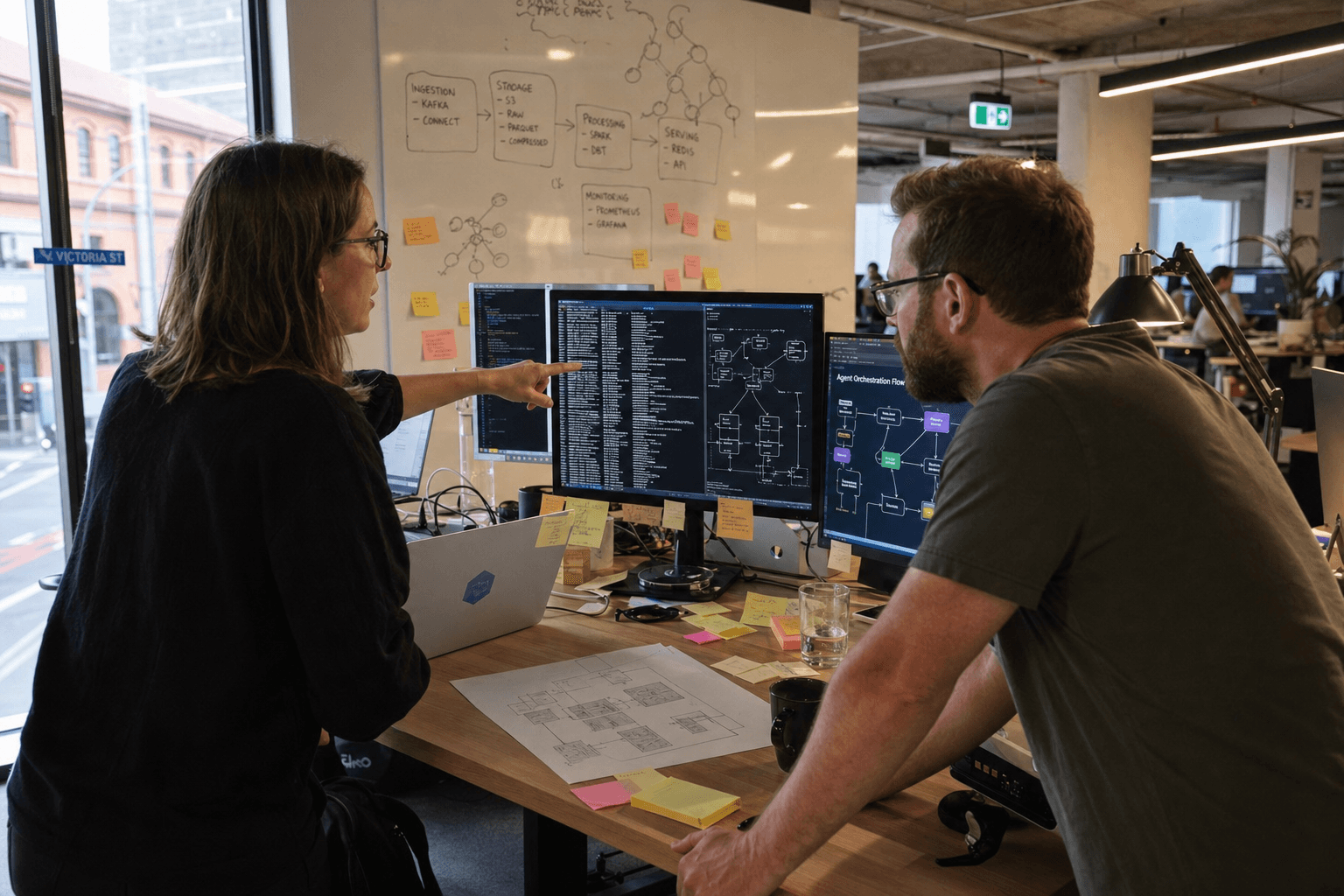
Production AI Agents: Architecture and Deployment Lessons
Production AI agents require careful orchestration, robust failure handling, and strategic human oversight. The gap between proof-of-concept and production-ready agents is significant — here's what actually works.

AI Security: Protecting Your Models, Data, and Users
Production AI systems face unique security challenges from prompt injection to model theft. Learn how to protect your AI models, data, and users with practical security measures designed for Australian organisations.

AI Guardrails: How to Prevent Your AI From Saying Something Dangerous
AI systems in production can generate harmful, biased, or sensitive outputs without proper safeguards. Learn how AI guardrails protect your business through content filtering, PII detection, output validation, and human-in-the-loop safety patterns.