From AI Pilot to Production: Scaling Your Proof of Concept
Most AI pilots never reach production deployment due to the gap between proof of concept and operational readiness. Learn how to bridge this gap with proper infrastructure, monitoring, and team planning.

What Happens After the AI Pilot? Scaling from Proof of Concept to Production
Your AI pilot worked. The demo impressed stakeholders, accuracy metrics looked promising, and everyone's excited about the potential. Then reality hits: moving from proof of concept to production AI is where most projects stall.
The gap between "it works in the lab" and "it works for customers at scale" is vast, filled with engineering challenges that weren't visible during the pilot phase. At Horizon Labs, we see this transition challenge regularly with mid-market Australian companies looking to operationalise their AI initiatives.
Why Most AI Pilots Fail to Scale
AI pilots fail to reach production because they're designed to prove concept viability, not operational readiness. Pilots typically use clean, limited datasets and run in controlled environments with manual oversight — conditions that don't exist in production systems.
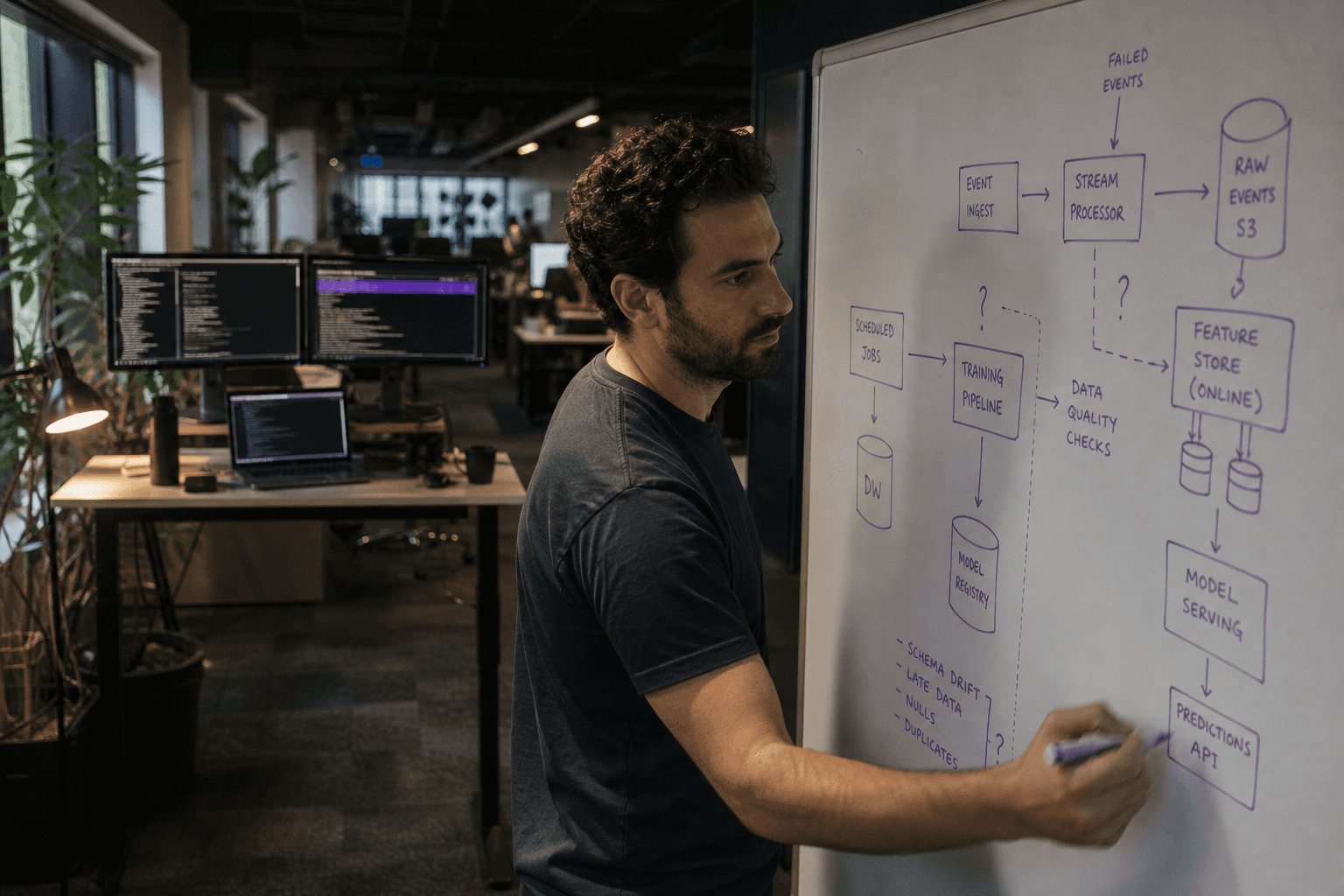
The pilot phase focuses on model accuracy and basic functionality. Production requires data pipelines, monitoring systems, error handling, security controls, and integration with existing business processes. These operational requirements substantially increase the complexity and resource requirements of the original pilot.
Common scaling obstacles include:
- Data pipeline fragility: Pilot data is curated; production data is messy, incomplete, and constantly changing
- Performance requirements: Response times that work for demos may not meet user expectations
- Integration complexity: Connecting AI outputs to existing workflows and systems
- Cost management: Production infrastructure and operational costs often exceed pilot projections
- Team handover: Transferring from data scientists to engineering teams with different skill sets
The Production Reality Check
Production AI systems require robust data infrastructure that most pilots skip entirely. Your pilot might process 1,000 records from a clean CSV file, but production needs to handle millions of records from multiple sources, with real-time updates and data quality monitoring.

Monitoring becomes critical at scale. Model drift, data quality issues, and performance degradation are invisible during short pilot runs but will break production systems over time. You need monitoring for model accuracy, data distribution changes, system performance, and business metrics.
Security and compliance requirements also emerge during production scaling. Pilot environments often bypass enterprise security controls for speed, but production systems must handle authentication, authorisation, data governance, and regulatory compliance from day one.
For Australian businesses, this includes compliance with the Privacy Act 1988, data sovereignty requirements, and industry-specific regulations that weren't considerations during the pilot phase.
Building the Bridge to Production
Successful AI scaling requires treating production requirements as first-class concerns, not afterthoughts. This means designing data pipelines, monitoring systems, and deployment infrastructure in parallel with model development, not after the pilot succeeds.
Data Infrastructure First Start with production-grade data infrastructure that can handle real-world data volumes, quality issues, and update frequencies. This includes data validation, transformation pipelines, and quality monitoring systems. Our data infrastructure approach ensures your AI systems can scale from day one.
Engineering Integration Early Involve engineering teams during the pilot phase, not after. They understand production constraints, system integration requirements, and operational concerns that data scientists might miss. This collaborative approach is central to our AI engineering methodology.
Monitoring from Day One Implement model monitoring, data quality checks, and performance tracking during pilot development. This makes production deployment smoother and catches issues before they impact users.
The Production Scaling Framework
Production-ready AI systems require different architecture, processes, and team structures compared to pilot projects:
Infrastructure Requirements
- Scalable compute resources that can handle peak loads
- Automated deployment pipelines with rollback capabilities
- Comprehensive logging and monitoring systems
- Data backup and disaster recovery procedures
- Security controls and access management
Operational Processes
- Automated model retraining and validation workflows
- Data quality monitoring and alerting
- Performance testing and capacity planning
- Incident response procedures
- Change management processes
Team Capabilities
- MLOps expertise for deployment automation
- DevOps skills for infrastructure management
- Data engineering for pipeline development
- Site reliability engineering for system monitoring
Managing Costs and Expectations
AI pilots often dramatically underestimate production costs because they don't account for infrastructure, monitoring, maintenance, and operational overhead. A pilot running on a laptop might require significant cloud infrastructure, dedicated engineering resources, and ongoing model maintenance at scale.
Set realistic cost expectations early by estimating production infrastructure requirements, not just pilot costs. Factor in compute costs for inference at expected volumes, storage costs for training data and model versions, and engineering time for maintenance and updates.
Plan for iterative deployment rather than big-bang launches. Start with limited production traffic, measure real-world performance, and scale gradually. This reduces risk and allows you to optimise costs and performance based on actual usage patterns.
Australian cloud providers like AWS Sydney or Microsoft Azure Australia can help with data sovereignty requirements while providing the scale needed for production AI systems.
The Team Transition Challenge
Most AI pilots are built by data scientists who excel at model development but may not have production engineering experience. Scaling to production requires DevOps skills, system integration expertise, and operational knowledge that data science teams often lack.
This transition requires careful planning and knowledge transfer. Document model assumptions, data requirements, and performance characteristics during pilot development. Create clear handover processes between data science and engineering teams.
Consider hybrid team structures where data scientists and engineers work together throughout the entire lifecycle, rather than sequential handoffs. This ensures production requirements inform model design decisions from the beginning.
The Strategic Approach to AI Production
Successful AI production deployment requires strategic thinking about your technology stack, team capabilities, and organisational readiness. Our AI product strategy work helps companies plan for production success from the pilot phase.
Key strategic considerations include:
- Technology architecture: Choosing tools and platforms that scale
- Team development: Building internal capabilities for ongoing AI operations
- Process integration: Connecting AI outputs to business workflows
- Risk management: Planning for model failures and edge cases
- Continuous improvement: Establishing feedback loops for model enhancement
Making AI Production-Ready
Successful AI engineering treats production deployment as the primary goal, with pilots designed to validate production assumptions rather than just prove concept feasibility. This means testing at scale early, building monitoring systems upfront, and designing for operational requirements from day one.
At Horizon Labs, we work with Australian mid-market companies to bridge the gap between AI pilots and production systems. We embed with your team, build production-grade infrastructure, and ensure you can maintain and evolve your AI systems independently.
The difference between a successful AI initiative and a stalled pilot project often comes down to production planning and engineering execution. By treating operational requirements as first-class concerns from the beginning, you can build AI systems that actually ship and deliver value to your business.
Ready to move your AI pilot to production? Get in touch to discuss your scaling challenges and explore how we can help make your AI initiative production-ready.
Chris Kerr
Partner at Horizon Labs, an AI product consultancy and venture studio. A commercially focused product and technology leader with 20+ years building and scaling digital platforms, teams, and businesses across SaaS, travel, eCommerce, logistics and transport, and digital marketing — operating at the intersection of product, engineering, and data. Writes about platform strategy, AI transformation, modern data ecosystems, and the operational discipline that separates AI demos from AI products.