GS1 Standards and AI-Powered Supply Chain Visibility
GS1 barcoding and traceability standards give Australian logistics and manufacturing businesses a common language for identifying products and tracking custody events. This article explains how those standards work and where AI-powered visibility tools genuinely add value on top of them — and where they can't compensate for weak data foundations.
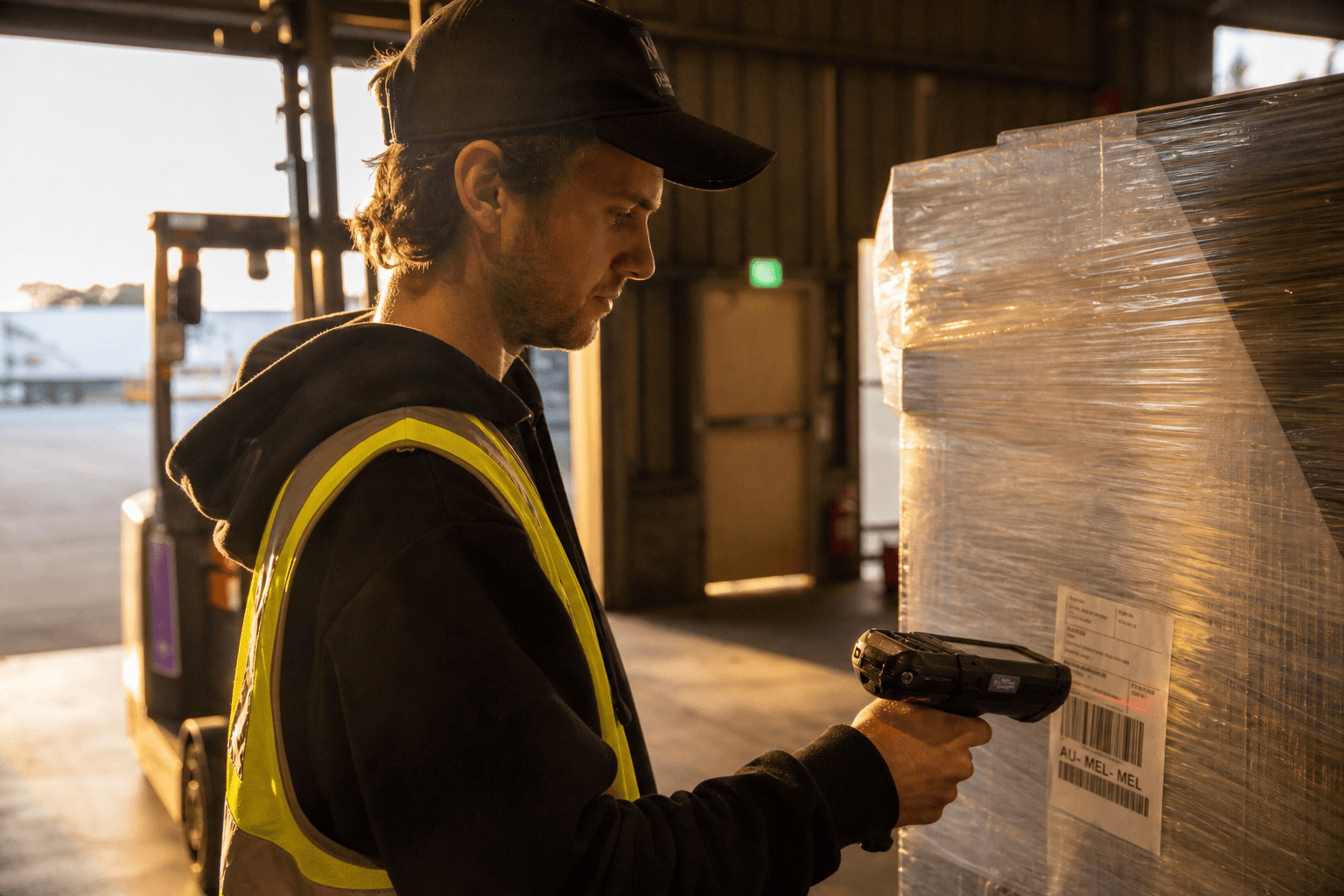
Australian logistics and manufacturing businesses have relied on GS1 standards for decades to identify products, locations, and shipments consistently across trading partners. As supply chains get more complex and customers demand faster answers about where a product has been, AI-powered visibility tools are starting to sit on top of that GS1 data — not replace it. Understanding the difference between the standard and the tooling matters before you invest in either.
What Are GS1 Standards, and Why Do They Matter for Australian Logistics?
GS1 is a not-for-profit standards organisation that maintains globally unique identification systems for products, locations, and logistics units — most visibly the barcode. GS1 standards are the specifications that let a barcode scanned in a Melbourne distribution centre mean the same thing to a supplier, a freight carrier, and a retailer anywhere in the world. In Australia, GS1 Australia (gs1au.org) administers these standards locally and works with sectors including grocery, healthcare, and freight to drive adoption.
The core identifiers most logistics operators encounter are the Global Trade Item Number (GTIN) for products, the Global Location Number (GLN) for physical or legal locations, and the Serial Shipping Container Code (SSCC) for logistics units such as pallets or cartons. These identifiers are encoded into barcodes — traditionally linear barcodes, increasingly GS1 DataMatrix or QR codes that carry more data, including batch numbers and expiry dates.
How Does GS1 Traceability Work in Practice?
GS1 traceability is the ability to track the movement and transformation of a product through the supply chain by capturing "what, where, and when" events at each handover point. In practice, this means scanning identifiers at receiving, put-away, picking, dispatch, and delivery, and recording those events against a shared data model so any party in the chain can reconstruct a product's history.
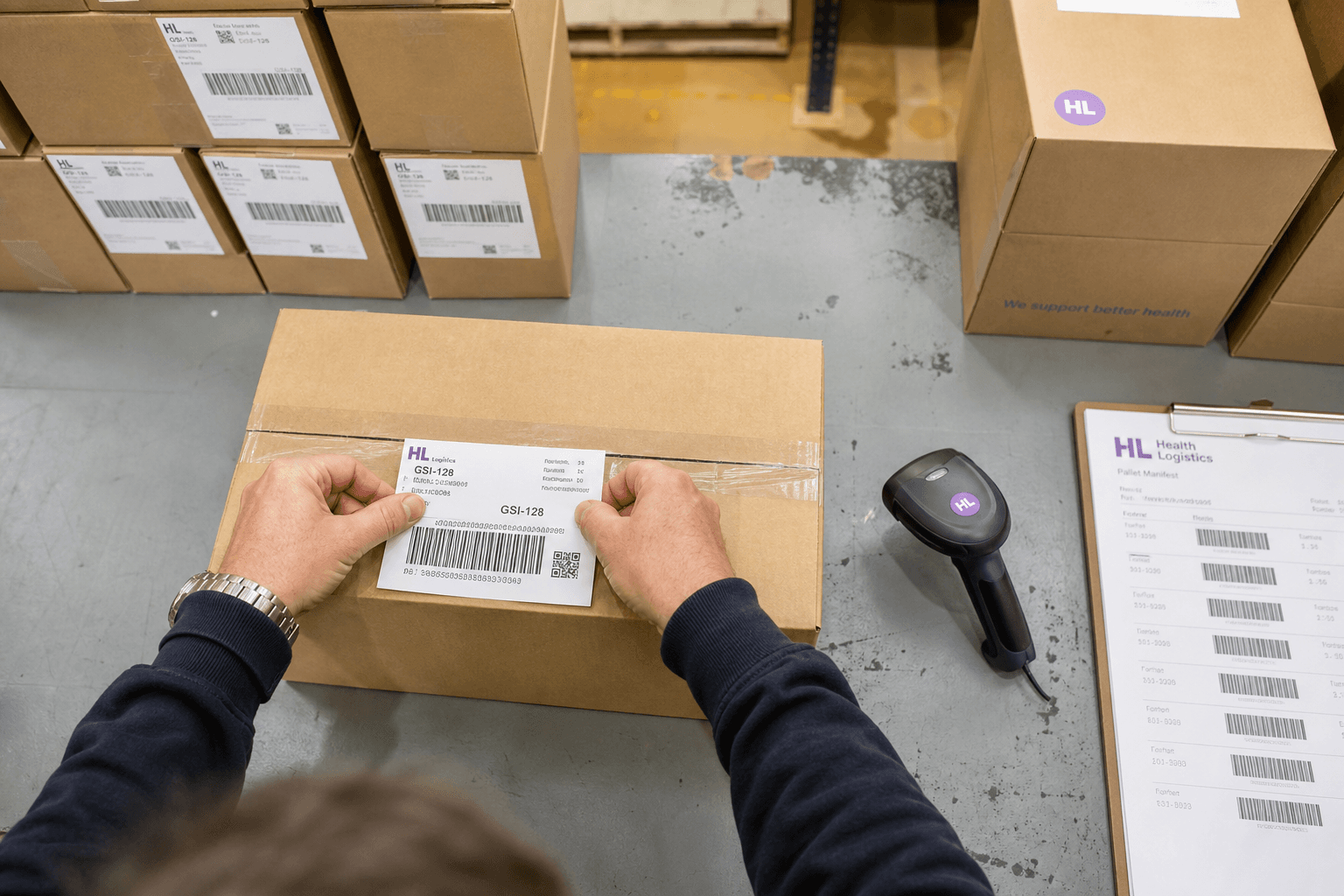
For manufacturers and logistics operators, this typically involves labelling at the point of production or packing, scanning at every custody change, and exchanging event data with trading partners — often through electronic data interchange or, increasingly, through GS1's EPCIS standard. Regulatory drivers matter here too: food and beverage businesses trading with major Australian retailers are frequently contractually required to meet GS1 barcoding and traceability standards, and recall obligations under Australian Consumer Law make accurate traceability a genuine compliance issue, not just an operational nicety.
What Is EPCIS and How Does It Enable End-to-End Visibility?
EPCIS (Electronic Product Code Information Services) is a GS1 standard that defines a common format for capturing and sharing supply chain event data between systems and organisations. Where a barcode identifies an object, EPCIS answers a broader question: what happened to that object, where, when, and why — for example, "pallet X was shipped from location Y to location Z at time T for reason: dispatch."
EPCIS matters for visibility because it's designed for multi-party sharing. A distribution centre, a carrier, and a retailer running different warehouse and transport systems can all publish and consume EPCIS events in the same structure, which is what makes true end-to-end tracking across a fragmented supply chain technically feasible rather than a manual reconciliation exercise.
Where Does AI Layer on Top of GS1 Data?
GS1 standards tell you what an item is and where it has been scanned. AI-powered visibility tools use that structured event data as an input to answer harder operational questions — where is a shipment likely to arrive, which lanes are trending toward delay, or which anomalies in scan data indicate a data quality or process issue rather than a genuine exception.

This is a meaningful distinction: AI does not generate traceability data, and it cannot compensate for gaps in scanning discipline or inconsistent GLN and GTIN allocation upstream. What it can do is pattern-match across the volume of GS1-compliant event data that most operators are already generating but not fully using — flagging exceptions earlier, predicting delays from historical lane and carrier performance, and reducing the manual effort of chasing status across multiple partner systems. Getting this right depends on having clean, well-modelled event data first, which is as much a data infrastructure problem as an AI one.
GS1 Compliance vs AI-Powered Visibility: What's the Difference?
| Dimension | GS1 Standards & Compliance | AI-Powered Visibility Tools |
|---|---|---|
| Primary purpose | Consistent identification and event capture | Pattern detection, prediction, and exception surfacing |
| What it requires | Correct GTIN/GLN/SSCC allocation, scanning discipline, EPCIS or EDI integration | Reliable, structured event data as an input |
| Typical driver | Trading partner or regulatory requirement | Operational efficiency and proactive decision-making |
| Failure mode if missing | Recalls, chargebacks, onboarding failures with major retailers | Noisy or unreliable predictions, false positives |
| Ownership | Usually supply chain / compliance function | Usually engineering, data, or operations |
The two are complementary rather than competing. Weak GS1 foundations will limit what any AI visibility layer can reliably tell you, regardless of how sophisticated the model is.
What Should Logistics Operators Consider Before Adding AI Visibility Tools?
Before layering AI on top of existing GS1 data, it's worth auditing how consistently identifiers are being applied and scanned across your own operations and your trading partners' systems. Inconsistent GLN allocation, missing scan events, or partners still on paper-based processes will undermine any predictive layer built on top, no matter how well the AI component performs.
It's also worth being clear-eyed about what AI visibility tools are good at versus what they aren't. They're well suited to surfacing patterns across large volumes of historical event data — carrier reliability trends, seasonal delay patterns, anomaly detection. They're less reliable for one-off, low-volume, or highly unusual events where there isn't enough historical signal to learn from. Any AI system deployed in this space should also be evaluated against Australia's emerging AI governance expectations, including the guidance coming out of DISR's work on responsible AI and the Voluntary AI Safety Standard, particularly around explainability of predictions that affect operational and customer commitments.
How Horizon Labs Approaches AI-Powered Supply Chain Visibility
We treat GS1 traceability data as the foundation, not an afterthought. Our work typically starts with a review of how identification and event data flows through a client's warehouse, transport, and partner systems — often as part of broader data infrastructure or application modernisation work — before scoping where an AI layer will add genuine operational value rather than just another dashboard. We also help teams think through the ai-product-strategy question of where to start: which lanes, which exceptions, which decisions are worth automating first.
If your organisation is generating GS1-compliant traceability data but not getting much operational value from it, that's usually a data modelling and integration problem before it's an AI problem — and it's worth diagnosing in that order. Read more on related topics in our insights.
If you're exploring how to turn existing GS1 traceability data into genuine supply chain visibility, we can help — starting with an honest assessment of what your data can and can't support today.
Chris Kerr
Partner at Horizon Labs, an AI product consultancy and venture studio. A commercially focused product and technology leader with 20+ years building and scaling digital platforms, teams, and businesses across SaaS, travel, eCommerce, logistics and transport, and digital marketing — operating at the intersection of product, engineering, and data. Writes about platform strategy, AI transformation, modern data ecosystems, and the operational discipline that separates AI demos from AI products.