Enterprise AI Chatbots in 2026: Build vs Buy
Enterprise chatbots in 2026 aren't a simple build-vs-buy call — managed platforms like Google's Gemini Enterprise Agent Platform now handle session state, RAG and governance out of the box. We break down when buying wins, when custom builds win, and the mid-market sweet spot in between.

What does "build vs buy" actually mean for enterprise chatbots in 2026?
By 2026, "buying" an enterprise chatbot rarely means a rigid SaaS widget — it means adopting a managed agentic platform, such as Google's Gemini Enterprise Agent Platform (the rebranded Vertex AI stack), that handles session state, retrieval and governance for you. "Building" means assembling that same infrastructure yourself, on open frameworks, with full control over the runtime. The decision is less about capability and more about who owns the plumbing.
This distinction matters because both paths can produce a technically competent chatbot. What differs is control, portability, and the engineering effort you take on versus the effort a vendor absorbs. Before comparing them, it's worth being clear-eyed about what a mature managed platform actually includes — because the gap is narrower than it was even two years ago.
What do you get when you buy a managed platform?
A managed agentic platform gives you production-grade conversational infrastructure — session handling, retrieval, and governance — without building any of it from scratch. That's the core value proposition, and it's substantial.

Google's Gemini Enterprise Agent Platform is a documented example of how far this has matured. It provides Reasoning Engines for stateful, multi-turn agent sessions, with support for synchronous query, streaming query, async query, and bidirectional WebSocket invocation — the connection patterns an enterprise chatbot needs to hold context across a conversation rather than treating every message as a fresh prompt. It ships native RAG primitives (retrieval corpora, context retrieval, prompt augmentation, and context-grounded querying) so responses can be grounded in your own knowledge base rather than the model's general training data. It includes semantic governance policies to constrain model behaviour, plus vector search, feature stores, prompt caching, model tuning and evaluation tooling, and synthetic data generation for testing. Client SDKs exist across Python, Go, Java, Node.js and C#, which means most engineering teams can integrate without adopting an unfamiliar language.
For teams weighing whether to build this stack in-house, the honest comparison is: this is roughly what you'd otherwise spend months building — session orchestration, a RAG pipeline, vector indexing, and a governance layer — bundled into managed services with SDKs on top.
What do you give up when you buy a managed platform?
What you give up is portability. Adopting a managed platform's session architecture, Reasoning Engine model, and RAG primitives means your chatbot's core logic is expressed in that platform's idioms — and migrating away later means re-architecting, not just re-pointing a config file.
This is the same trade-off that shows up in low-code and model-driven development more broadly: pure no-code or black-box platforms create lock-in because the generated logic lives inside a proprietary runtime you don't control, whereas approaches that generate genuine, ownable source code reduce that risk. Applied to chatbots, a fully managed platform accelerates delivery but ties your conversational logic, session model and retrieval pipeline to one vendor's architecture. That's not necessarily a bad trade — but it should be a deliberate one, not a default.
What does a custom agentic build give you that a platform doesn't?
A custom build gives you full control over the runtime, the data flow, and the model choice — nothing about your chatbot's architecture is dictated by a vendor's roadmap. You decide how sessions are stored, which retrieval approach fits your data, and which model (or combination of models) powers each interaction.
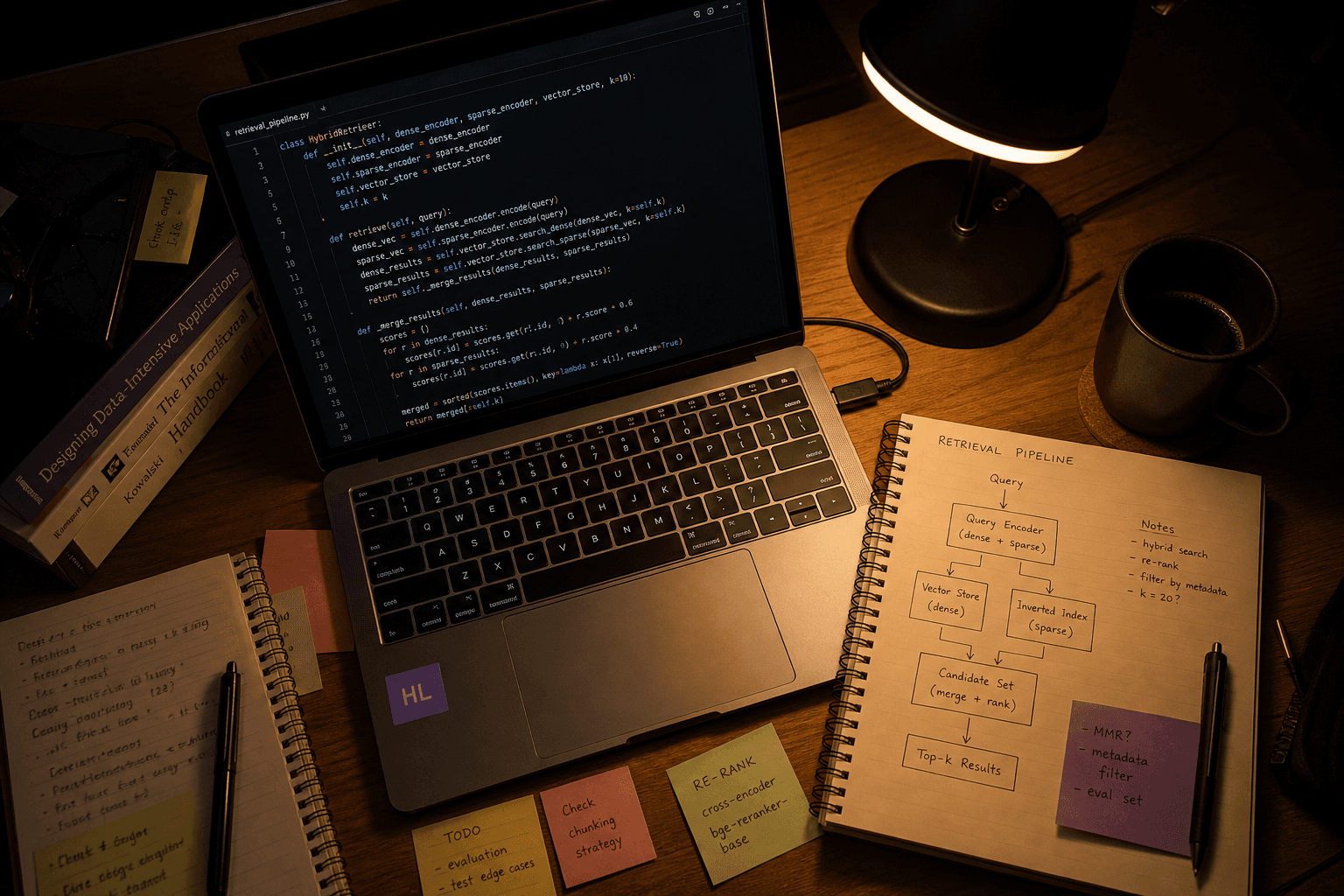
The cost of that control is engineering effort. You're building session management, a retrieval pipeline, monitoring, and governance guardrails yourself — the same categories a managed platform provides out of the box. For teams that already have this expertise, or specific requirements a managed platform can't meet, that effort is well spent. For teams without it, it's a meaningful lift. We've covered the mechanics of designing autonomous, tool-using agents separately in our piece on AI agents — this article focuses on the higher-level build-vs-buy call, not the agent design itself.
Platform vs custom build: comparing cost, control, data privacy and integration depth
There's no publicly benchmarked cost comparison we can cite responsibly — pricing depends heavily on usage volume, model choice, and existing team capability, and we won't invent figures to fill that gap. The table below compares the two approaches qualitatively, on the dimensions that actually drive the decision.
| Dimension | Managed platform (buy) | Custom agentic build |
|---|---|---|
| Time to first production version | Faster — session, RAG, and governance primitives are pre-built | Slower — same components built and tested from scratch |
| Ongoing engineering effort | Lower — vendor maintains infrastructure and SDKs | Higher — your team owns infrastructure, upgrades, and monitoring |
| Architectural control | Lower — logic expressed in the platform's session/runtime model | Higher — you choose models, storage, and orchestration patterns |
| Vendor lock-in risk | Higher — migrating means re-architecting, not reconfiguring | Lower — portable across models and infrastructure providers |
| Data privacy posture | Depends on vendor's data residency, retention, and processing terms | Fully determined by your own infrastructure and data handling choices |
| Integration depth with legacy systems | Good for standard patterns; constrained by platform's connector model | Unconstrained — integrate however your legacy stack requires |
| Governance and compliance tooling | Built-in (e.g. semantic governance policies) but vendor-defined | Custom-built to your exact policy and audit requirements |
Data privacy deserves a specific note: a managed platform's privacy posture is only as good as the vendor's documented data residency, retention and processing terms for your region and industry — that's a due diligence exercise with your legal and security teams, not a default assumption in either direction.
When does buying win?
Buying wins when speed to production matters more than architectural control, and your requirements fit within the platform's session, retrieval and governance model without heavy customisation. This covers a large share of enterprise chatbot use cases — internal knowledge assistants, customer support triage, and standard RAG-grounded Q&A over a defined knowledge base.
If your team lacks deep experience building RAG pipelines or agent orchestration in-house, a managed platform also reduces execution risk. You're relying on infrastructure that's actively maintained and used at scale, rather than a first attempt at session management and vector retrieval.
When does building win?
Building wins when you have specific data privacy, model-choice, or integration requirements that a managed platform's architecture can't accommodate — or when long-term portability outweighs short-term delivery speed. This is common in regulated industries, or where a chatbot needs to integrate tightly with legacy systems that don't fit a vendor's standard connector model.
It also wins when you already have, or are building, in-house AI engineering capability. In that case, the infrastructure a managed platform provides is less of an accelerant and more of a constraint on flexibility you'd otherwise have.
Where's the mid-market sweet spot?
For most Australian mid-market and scale-up organisations — companies with a technology team but limited in-house AI/ML depth — the practical sweet spot is a hybrid: start on a managed platform to reach production quickly, while keeping the conversational logic, prompts, and data pipelines as portable and well-documented as possible. This gets you a working chatbot fast without foreclosing a future migration if the platform's constraints become a real limitation.
This is where the low-code lock-in framework becomes genuinely useful: treat any managed platform decision as "buy-and-own" where possible — own your prompts, your data schemas, and your evaluation criteria — rather than "buy-and-lock-in", where your entire chatbot logic is inseparable from one vendor's runtime. A short architecture review before committing to a platform is usually the highest-leverage step here, because retrofitting portability after six months in production is far harder than designing for it up front.
Is this really "build vs buy" — or "buy-and-own vs buy-and-lock-in"?
The more useful framing for 2026 is buy-and-own versus buy-and-lock-in, because almost every enterprise chatbot today is built on some combination of managed model APIs and custom orchestration — pure build-from-scratch is rare, and pure black-box buy is riskier than it looks. The real decision is how much of your conversational logic, data, and evaluation criteria you keep in a form you control, regardless of which platform sits underneath.
We should be upfront about the limits of this article: it draws on detailed, current documentation for one major managed platform and a general framework on vendor lock-in, but there's no independently verified cost comparison or benchmarked build-cost data available to cite. Treat the guidance here as a framework for asking the right questions with your own team and vendors — not a substitute for a proper technical scoping exercise against your specific requirements.
If you're weighing this decision for your own organisation, an AI product strategy engagement or a focused architecture review is usually the fastest way to get a defensible answer, rather than guessing from vendor marketing on one side or a whiteboard estimate on the other. Our AI engineering team has built both managed-platform and custom agent implementations, and can help you scope which one — or which hybrid — fits your data, compliance, and legacy integration constraints. For chatbots that need to sit on top of existing systems, it's also worth reading how we approach application modernisation and data infrastructure, since a chatbot is only as good as the data and systems behind it. You can browse more of our insights on AI adoption, or if you're exploring build vs buy for your own chatbot project, get in touch — we're happy to talk through where your specific requirements point.
Chris Kerr
Partner at Horizon Labs, an AI product consultancy and venture studio. A commercially focused product and technology leader with 20+ years building and scaling digital platforms, teams, and businesses across SaaS, travel, eCommerce, logistics and transport, and digital marketing — operating at the intersection of product, engineering, and data. Writes about platform strategy, AI transformation, modern data ecosystems, and the operational discipline that separates AI demos from AI products.