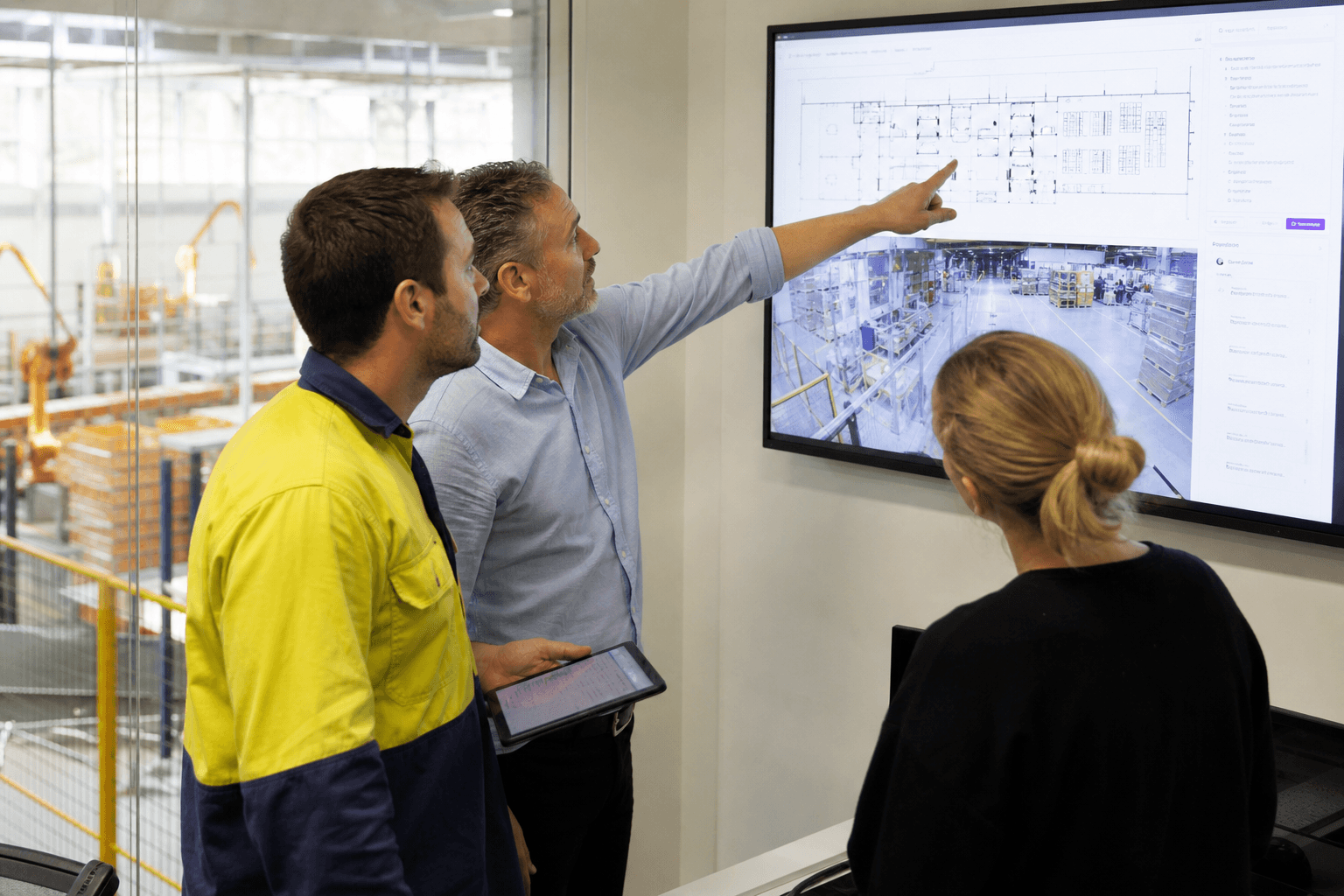
AI Readiness Assessment: A Practical Guide for Australian Businesses
An AI readiness assessment is the structured process of evaluating whether your organisation has the data, infrastructure, talent, and cultural foundations needed to adopt AI successfully. This guide covers the five readiness dimensions, maturity models, and a practical assessment framework for Australian businesses considering AI adoption.

An AI readiness assessment is the structured process of evaluating whether your organisation has the data, infrastructure, talent, and cultural foundations needed to adopt artificial intelligence successfully. For Australian businesses navigating the gap between AI hype and production reality, a structured assessment is the most honest starting point — and the one most often skipped.
This guide covers what a thorough AI readiness assessment looks like, the maturity frameworks that inform it, and how to translate findings into a roadmap that actually ships.
What Is an AI Readiness Assessment?
An AI readiness assessment is a diagnostic process that evaluates an organisation across multiple dimensions — data maturity, technology infrastructure, talent capability, process design, and strategic alignment — to determine where AI adoption is viable, where gaps exist, and what sequence of investment makes sense.
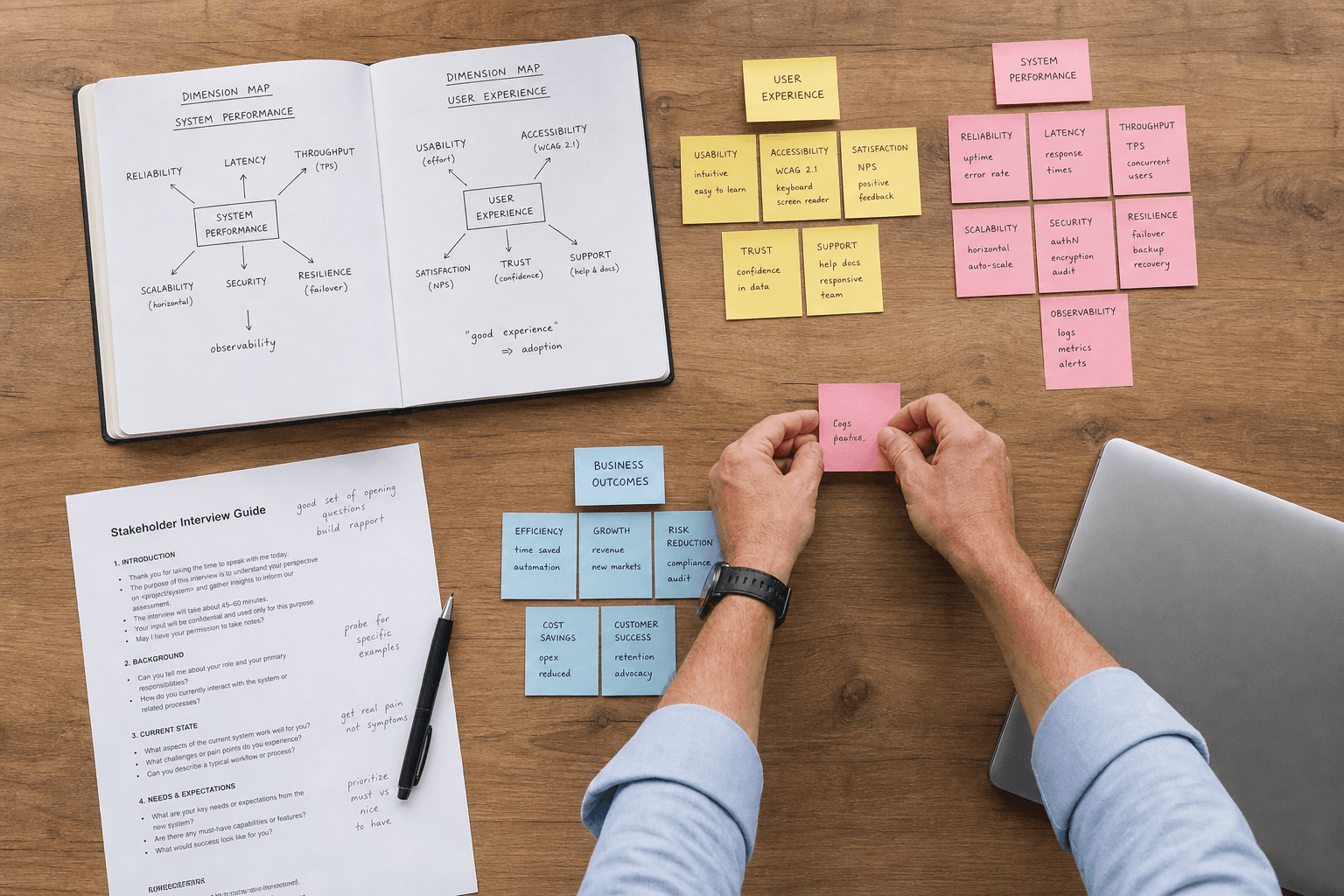
It is not a vendor pitch dressed up as analysis. A genuine assessment produces findings that may conclude AI is premature for certain parts of your business, and that foundational data or infrastructure work needs to happen first. That honest output is the point.
For Australian mid-market and enterprise businesses, assessments typically span two to four weeks and involve stakeholder interviews, architecture review, data landscape analysis, and a prioritised opportunity register.
Why AI Readiness Matters Before You Build
Most AI projects that stall or fail do so for reasons that a readiness assessment would have surfaced early: data that is siloed, inconsistent, or simply not collected; infrastructure that cannot serve models reliably in production; teams without the skills to maintain what gets built; or business problems that were never clearly defined.
Investing in assessment before committing to a build programme is not a delay — it is the fastest path to AI that works in production rather than a notebook. The cost of a thorough assessment is typically a fraction of the cost of a misaligned build.
The Five Dimensions of AI Readiness
A robust AI readiness assessment examines your organisation across five interconnected dimensions. Weakness in any one of them will constrain what is possible in the others.

1. Data Maturity
Data maturity is the degree to which your organisation collects, stores, governs, and can reliably access the data that AI models require. This is the most common bottleneck at Australian mid-market companies.
Key questions include: Is your data centralised or fragmented across systems? Do you have defined data ownership and governance policies? Is your data labelled, clean, and historically consistent enough for model training? Do you have real-time or near-real-time data pipelines, or are you working from batch exports?
Organisations with strong data maturity tend to have a data warehouse or lakehouse, documented schemas, and at least one team responsible for data quality. Those without these foundations typically need data infrastructure work before AI investment delivers reliable returns.
2. Technology Infrastructure
Technology infrastructure readiness covers the compute, cloud architecture, API surface, and DevOps practices that determine whether AI models can be deployed, scaled, and maintained in production.
An AI model that works in a notebook but cannot be served reliably at scale is not a production AI system — it is a prototype. Infrastructure assessment asks: Do you have cloud infrastructure that can scale inference workloads? Are your internal systems API-accessible, or are they locked in monolithic applications? Do you have CI/CD pipelines and deployment practices that can accommodate model versioning and rollback?
If your backend runs on a legacy monolith with limited API exposure, application modernisation is often a prerequisite before AI features can be integrated cleanly.
3. Talent and Capability
Talent readiness is an assessment of the skills, roles, and organisational design that determine whether your team can build, deploy, and maintain AI systems — or whether you need external support, and for how long.
This dimension looks at: Does your engineering team have ML engineering or data science capability? Do you have data engineers who can build and maintain pipelines? Is there product or design capability that understands how to build AI-native user experiences? And critically — do your business leaders understand enough about AI to make good prioritisation decisions?
Most growing Australian businesses at the 50-500 employee stage do not need to build a large internal AI team. What they need is a clear view of which capabilities to hire for, which to develop, and which to access through specialist partners.
4. Process and Use Case Alignment
Process readiness examines whether your business processes are defined clearly enough to be augmented or automated with AI — and whether the use cases you are considering are genuinely suited to AI solutions.
Not every problem is an AI problem. A process that is undocumented, highly variable, or dependent on human judgment in ways that are difficult to articulate is a poor candidate for early AI adoption. A process that is repetitive, data-rich, and has clear success criteria is a strong candidate.
This dimension also asks: Do you have access to subject matter experts who can validate model outputs? Are there regulatory or compliance constraints that affect how AI can be used in your industry? For Australian businesses in financial services, healthtech, or legal tech, this dimension often surfaces requirements under frameworks like the Privacy Act 1988 and the emerging AI governance guidelines from the Department of Industry, Science and Resources.
5. Strategic and Leadership Alignment
Strategic readiness is the degree to which your leadership team has a shared, realistic view of what AI can deliver, what it costs, and what the organisation needs to do differently to capture that value.
The most technically capable AI programme will stall without executive sponsorship, clear ownership, and a willingness to change the processes and roles that AI affects. This dimension asks: Is there a clear executive sponsor for AI adoption? Is there alignment between technology and business leadership on priority use cases? Is the organisation prepared for the change management that AI adoption requires?
AI Maturity Models: Where Does Your Organisation Sit?
An AI maturity model provides a structured way to describe your current state and define what progression looks like. Most credible frameworks describe four to five levels, from initial or ad hoc through to optimised or AI-native.
| Maturity Level | Description | Typical Characteristics |
|---|---|---|
| Level 1 — Initial | No structured AI activity | Data in silos, no ML capability, AI discussed but not planned |
| Level 2 — Exploring | Pilots underway, limited production | Ad hoc experiments, notebook-based models, no MLOps |
| Level 3 — Developing | First production deployments | Data pipelines in place, initial MLOps, small AI team or partner |
| Level 4 — Scaling | AI embedded in core products | Reusable infrastructure, model monitoring, business-led use cases |
| Level 5 — AI-Native | AI across the business | Continuous learning systems, AI governance, competitive differentiation |
Most Australian mid-market businesses Horizon Labs works with arrive at Level 1 or Level 2. The goal of an assessment is not to declare a level and stop — it is to identify the specific gaps that are preventing progression and sequence the work to close them.
How to Structure an AI Readiness Assessment
A well-structured AI readiness assessment follows a consistent sequence regardless of company size or industry.
Phase 1: Scoping and Stakeholder Alignment (Days 1-3)
Before any technical review begins, the assessment team aligns with business and technology leadership on the scope, the business problems on the table, and the decision the assessment is designed to inform. This is where you surface competing priorities, existing initiatives, and any constraints (budget, timeline, compliance) that will shape the recommendations.
Phase 2: Discovery — Data and Technical Landscape (Days 4-10)
This phase involves structured interviews with data, engineering, and product leaders alongside a review of your current data architecture, infrastructure, and any existing AI or analytics work. The goal is a clear picture of the current state across the five dimensions described above — not assumptions, but documented findings.
Phase 3: Use Case Identification and Prioritisation (Days 8-14)
Drawing on the discovery findings and business context, this phase identifies candidate AI use cases, evaluates their feasibility and potential value, and prioritises them against a simple framework: data availability, technical complexity, business impact, and time to value.
Output is typically a prioritised use case register — not a list of everything AI could theoretically do, but a ranked set of opportunities your organisation can credibly pursue given your current state.
Phase 4: Gap Analysis and Roadmap (Days 12-18)
The gap analysis maps the delta between your current state and what is required to pursue the priority use cases. The roadmap sequences the work — including any foundational data, infrastructure, or capability investments — into phases with realistic timelines and resource requirements.
This is the deliverable that distinguishes a genuine assessment from a sales deck. A credible roadmap will include prerequisites, dependencies, and honest estimates of effort — not just a list of AI features to build.
Phase 5: Findings, Recommendations, and Handoff (Days 16-20)
Findings are presented to business and technology leadership with clear prioritisation, reasoning, and next steps. A well-run assessment leaves you with a document you can act on independently — not one that requires the consultant to stay engaged to interpret.
Common Findings from AI Readiness Assessments
While every organisation is different, certain patterns appear consistently in assessments across Australian mid-market businesses.
Data fragmentation is the most common blocker. Customer data sits in a CRM, transaction data in a legacy ERP, and operational data in spreadsheets. Without a consolidated, reliable data layer, even simple ML applications cannot be built or trusted.
Infrastructure is often not AI-ready. Many growing businesses have a modern frontend but a legacy backend that lacks the API surface, reliability, or scalability that AI features require. This is not a blocker — it is a sequencing question — but it needs to be surfaced early.
Use case ambition outpaces data reality. Leadership teams often arrive at an assessment with ambitious AI use cases — predictive pricing, personalisation engines, intelligent document processing — that require data their organisation does not currently collect or cannot reliably access. The roadmap needs to include the data investment, not just the model build.
Governance and compliance are underweighted. Australian businesses in regulated industries frequently discover during assessment that their AI ambitions intersect with privacy, bias, or explainability requirements they have not yet planned for. The Australian Government's voluntary AI Ethics Principles and sector-specific guidance from regulators like APRA and ASIC are increasingly relevant here.
AI Readiness Assessment for Specific Australian Industries
The five dimensions apply across industries, but the emphasis shifts depending on sector context.
Financial services and fintech assessments tend to focus heavily on data governance, model explainability, and compliance with APRA prudential standards and ASIC's expectations around automated decision-making. Use cases often involve credit assessment, fraud detection, or customer service automation.
Healthtech and digital health assessments place significant weight on data privacy under the Privacy Act 1988 and the My Health Records Act 2012, model clinical validity, and the regulatory pathway for AI-assisted clinical tools under the TGA's guidance on software as a medical device.
Logistics and supply chain assessments typically focus on the quality and completeness of operational data, integration with ERP and WMS systems, and the business case for demand forecasting, route optimisation, or predictive maintenance.
SaaS and software product companies assessments often surface opportunities to embed AI features directly into the product — but also reveal that the core platform needs AI product strategy work before individual features make sense to build.
What a Good AI Readiness Assessment Deliverable Looks Like
At the end of a thorough assessment, you should have a clear answer to four questions:
- Where are we now? A documented view of your current state across the five readiness dimensions, with evidence.
- What is possible? A prioritised register of AI use cases that are feasible given your current or near-term state.
- What needs to happen first? A gap analysis that sequences the foundational work — data, infrastructure, capability — before or alongside AI build work.
- What does the roadmap look like? A phased plan with realistic timelines, resource requirements, and decision points.
If an assessment does not produce clear answers to all four, it has not done its job.
How an AI Readiness Assessment Fits Into a Broader AI Journey
An assessment is a starting point, not an endpoint. The findings feed directly into a programme of work that typically spans three phases.
Foundation covers the data and infrastructure investments needed to make AI viable — data pipelines, cloud infrastructure, API modernisation. This is often where the most important and least glamorous work happens.
Build covers the design, development, and deployment of the priority AI use cases identified in the assessment — whether that is an LLM-powered feature, a predictive model, or an AI agent. This is where AI engineering capability becomes central.
Operate covers the monitoring, retraining, governance, and continuous improvement practices that keep AI systems working reliably after launch. Production AI is not a one-time deployment — it requires ongoing attention.
Organisations that skip the assessment phase often end up doing it retrospectively — after a build programme has stalled and they need to understand why.
Running an Internal Assessment vs. Engaging a Specialist
Some organisations have the capability to run a meaningful internal assessment, particularly if they have a strong data or platform engineering function. Internal assessment has genuine advantages: institutional knowledge, access to sensitive systems, and no external cost.
The limitations are also real. Internal teams are close to the problem and may not surface structural gaps that feel normal from the inside. They also carry the political cost of surfacing findings that challenge existing decisions or priorities — which is often where the most valuable insights sit.
External assessments are typically more effective when the organisation is at an inflection point — new leadership, a funding round, a platform modernisation mandate, or a genuine strategic decision about AI investment. The value is not just the framework but the independent perspective.
For more on this decision, see our piece on AI consulting vs in-house capability in our insights library.
Getting Started: Practical First Steps
If you are considering an AI readiness assessment, three immediate actions will make the process faster and more productive regardless of who runs it.
Document your data landscape. Even a rough inventory of what data you collect, where it lives, and how it is accessed is more valuable going into an assessment than starting from scratch. The gaps in that inventory are often as informative as what is there.
Define the business problems you want AI to solve. Vague intent — "we want to use AI" — produces vague findings. Arriving with two or three specific business problems you want to evaluate against AI creates a focused and actionable assessment.
Identify your constraints early. Budget, timeline, regulatory environment, and existing technology commitments all shape what a realistic roadmap looks like. Surfacing these upfront prevents the assessment producing recommendations that are theoretically correct but practically undeliverable.
If you are exploring what an AI readiness assessment would look like for your organisation, we are happy to have a direct conversation about your context and what a structured evaluation would involve. Get in touch and tell us about the problem you are trying to solve — no sales process, just a technical conversation.
Chris Kerr
Partner at Horizon Labs, an AI product consultancy and venture studio. A commercially focused product and technology leader with 20+ years building and scaling digital platforms, teams, and businesses across SaaS, travel, eCommerce, logistics and transport, and digital marketing — operating at the intersection of product, engineering, and data. Writes about platform strategy, AI transformation, modern data ecosystems, and the operational discipline that separates AI demos from AI products.