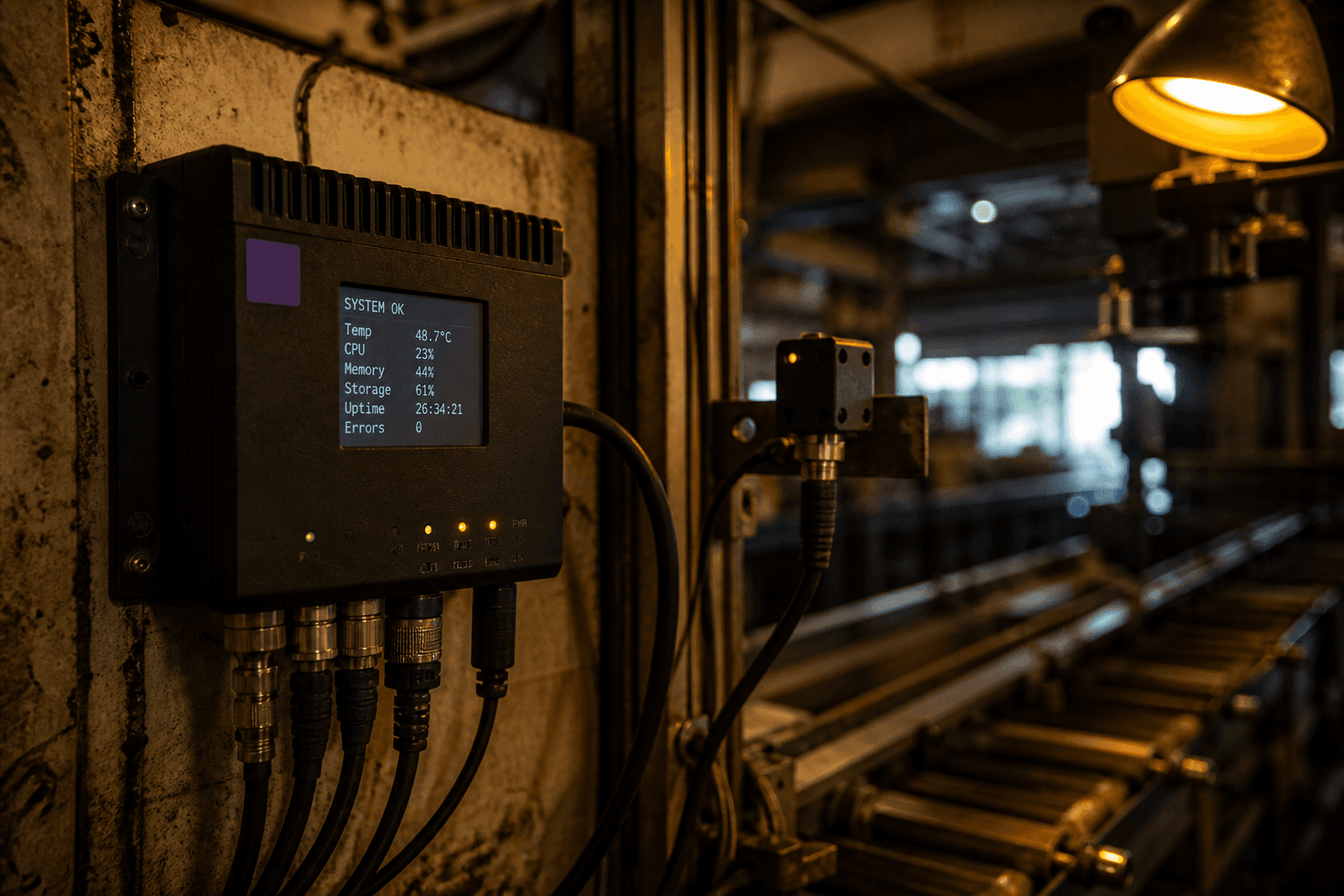
Scaling AI Pilots to Production: The Technical Reality in Australia
Moving from AI pilot to production requires more than scaling up—it demands different architecture, skills, and processes. Most pilots skip the infrastructure and operational complexity needed for real-world deployment.

Scaling AI Pilots to Production: The Technical Reality in Australia
Your AI pilot worked. The demo impressed stakeholders, the prototype showed promise, and everyone's excited about the possibilities. But there's a substantial gap between a successful proof of concept and a production system that delivers value at scale.
The transition from pilot to production represents one of the most challenging phases in AI implementation. While pilots focus on demonstrating capability, production systems must deliver consistent value to real users with real data and real business constraints.
Why Scaling AI Pilots Is Challenging
AI pilots succeed in controlled environments with clean, curated datasets and manual oversight. Production systems need to handle messy, incomplete data streams while maintaining consistent performance across varying conditions and user loads.

Pilots typically run on static datasets where data scientists can manually intervene when something breaks. Production systems require automated data processing, real-time decision making, and resilience to data quality issues without human intervention.
The technical architecture that works for pilot projects rarely scales to production requirements. What performs adequately for ten users in a controlled test may fail completely under real-world conditions with hundreds or thousands of concurrent users.
The Production Readiness Gap
Production AI systems require infrastructure and processes that pilot projects often skip entirely. This infrastructure gap represents the primary barrier between successful pilots and valuable production systems.

Data Pipeline Requirements
Pilots often work with carefully prepared datasets uploaded manually or through simple scripts. Production systems need robust data ingestion pipelines that can handle schema changes, missing values, and data quality variations automatically.
Your data infrastructure must support the full data lifecycle: ingestion, validation, preprocessing, storage, and serving. This typically means moving from ad-hoc scripts to orchestrated workflows with proper error handling, retry logic, and monitoring capabilities.
Data freshness becomes critical in production. While pilots can work with week-old data, production systems often require real-time or near-real-time processing to maintain relevance and accuracy.
Model Operations and Monitoring
Production models drift over time as underlying data patterns change. Without proper monitoring, performance degradation goes unnoticed until it affects user experience or business outcomes.
Effective model monitoring tracks multiple dimensions: prediction accuracy, input data distribution, model confidence scores, and business metrics. These systems need to detect anomalies and trigger appropriate responses, whether that's alerting operations teams or automatically initiating model retraining.
Beyond model performance, you need comprehensive system monitoring: API response times, throughput capacity, error rates, and resource utilisation. The infrastructure supporting your AI requires the same operational discipline as any other business-critical system.
Security and Compliance
Pilots often operate with relaxed security controls that are unacceptable in production environments. Production AI systems must implement proper authentication, authorisation, data encryption, and audit logging.
Australian organisations face specific compliance requirements around data privacy and protection. Your production AI systems must handle personal information appropriately and maintain audit trails for regulatory compliance.
The Skills and Team Challenge
The team that builds your pilot rarely has the complete skill set needed for production operations. Data scientists excel at experimentation and model development but may lack experience with deployment automation, infrastructure management, or incident response procedures.
Successful transitions require clear role definitions and knowledge transfer processes. Production teams need to understand not just how the model works, but why specific design decisions were made, what failure modes to expect, and how to troubleshoot issues independently.
Many Australian organisations discover that their internal teams need significant upskilling or external support to bridge this gap effectively. The skills needed for successful pilots differ substantially from those required for production operations.
Managing Operational Complexity
Pilot projects typically ignore operational realities that become unavoidable in production. Cloud computing costs, ongoing maintenance overhead, and operational complexity all compound as systems scale.
Cost management requires understanding usage patterns, optimising model inference performance, and implementing appropriate resource scaling strategies. Models that run inexpensively during pilot testing may consume significant resources when serving real user traffic.
Operational complexity grows as you implement production requirements: user management, data privacy controls, comprehensive logging, backup procedures, and disaster recovery capabilities. Each additional requirement adds overhead that wasn't visible during the pilot phase.
Building for Production from the Start
The most successful AI implementations consider production requirements during the pilot phase. This means selecting technologies that support production deployment, designing APIs that can scale, and involving operations teams from the beginning.
AI engineering should incorporate production thinking early: containerisation strategies, monitoring instrumentation, deployment automation, and performance optimisation. The additional effort during pilot development pays substantial dividends during the scaling phase.
Consider the complete technology ecosystem, not just the model itself. How will you handle user authentication and access control? What happens when external APIs become unavailable? How will you manage model updates without service disruption?
Successful Transition Strategies
Successful pilot-to-production transitions require dedicated project management and clearly defined success criteria. Establish specific definitions for "production-ready" that align with your organisation's requirements: uptime targets, performance benchmarks, security standards, and compliance needs.
Plan for parallel development where pilot learnings inform production architecture design rather than attempting to retrofit pilot code for production use. This approach maintains development momentum while building proper technical foundations.
Consider whether your internal team has the necessary skills for production AI operations, or whether partnering with specialists in reliability engineering, security implementation, and performance optimisation would be more effective.
The Australian Context
Australian organisations face unique considerations when scaling AI systems. Data sovereignty requirements may limit cloud provider options or require specific data handling procedures. Compliance with Australian Privacy Principles adds complexity to data processing pipelines.
The relatively small Australian market means that production AI systems often need to handle lower but more variable traffic patterns compared to global applications. This requires different scaling strategies and cost optimisation approaches.
Working with local partners can provide advantages in understanding regulatory requirements and building systems that align with Australian business practices and compliance frameworks.
Making Strategic Decisions
The decision to scale an AI pilot to production should be based on clear business value rather than technical achievement. Successful pilots demonstrate capability, but production systems must deliver measurable business outcomes that justify ongoing investment.
Evaluate whether your organisation has the technical infrastructure, operational capabilities, and ongoing commitment required for production AI systems. Sometimes the most strategic decision is to partner with specialists rather than building all capabilities internally.
Consider AI product strategy that aligns technical capabilities with business objectives and operational realities. This strategic perspective helps ensure that your production AI systems deliver sustainable value rather than impressive demonstrations.
Scaling AI pilots to production represents a significant technical and organisational challenge that many Australian companies underestimate. Success requires careful planning, appropriate skills, and often external expertise to bridge the gap between pilot success and production value.
If you're evaluating how to scale your AI pilot or planning production deployment, get in touch to discuss your specific challenges and requirements.
Chris Kerr
Partner at Horizon Labs, an AI product consultancy and venture studio. A commercially focused product and technology leader with 20+ years building and scaling digital platforms, teams, and businesses across SaaS, travel, eCommerce, logistics and transport, and digital marketing — operating at the intersection of product, engineering, and data. Writes about platform strategy, AI transformation, modern data ecosystems, and the operational discipline that separates AI demos from AI products.