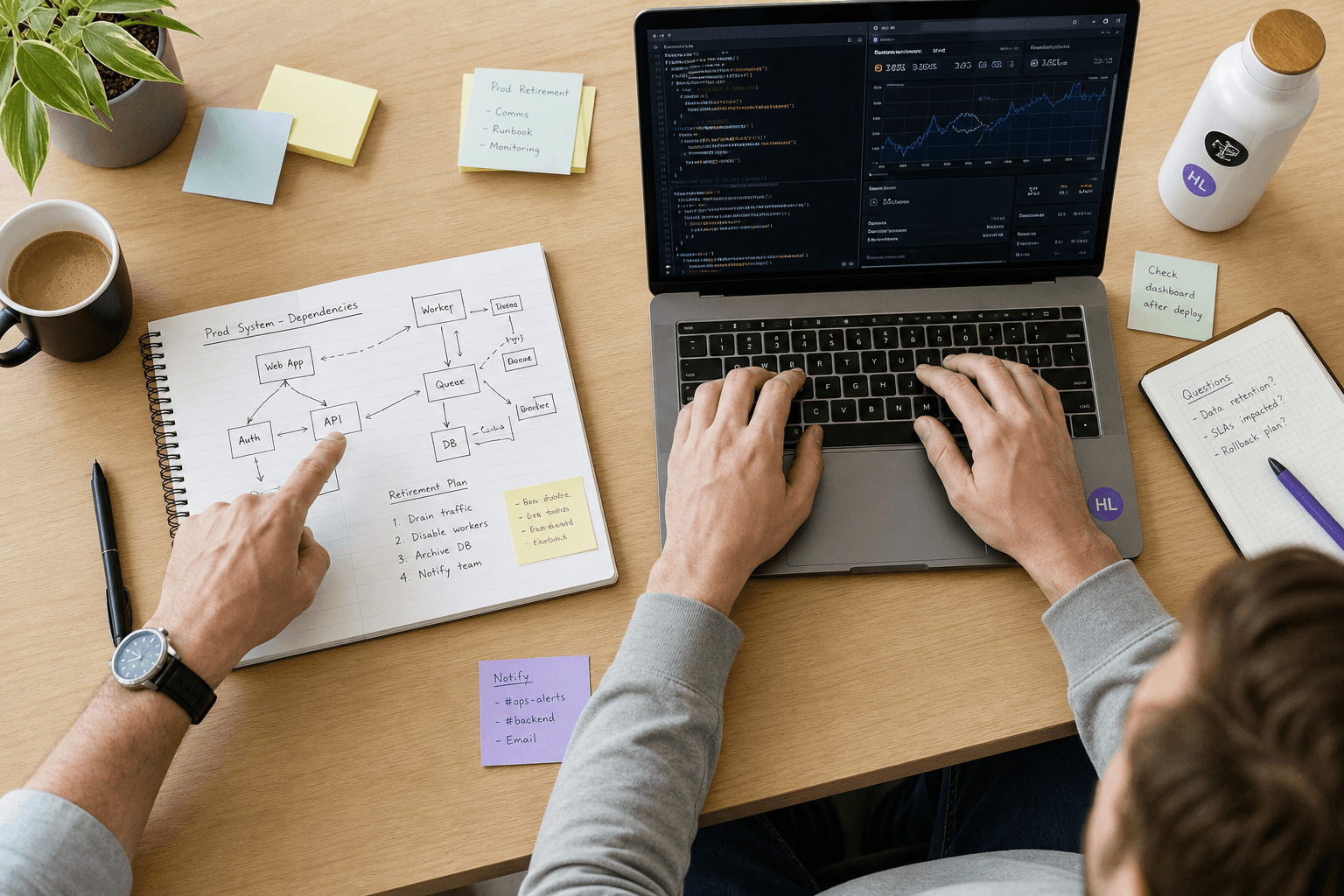
AI-Augmented FP&A: Revenue and Cashflow Forecasting
Machine learning can sharpen revenue and cashflow forecasts for growing Australian businesses, but only when paired with clean data and disciplined finance judgement. Here's what data, model choice, and human oversight actually look like in practice.

Financial planning and analysis teams at growing Australian companies are under more pressure than ever to forecast accurately — boards want tighter cashflow visibility, investors want defensible revenue models, and the cost of getting it wrong compounds quickly when a business is scaling headcount or inventory ahead of revenue. Machine learning is increasingly part of the answer, but it works best as an augmentation to traditional FP&A discipline, not a replacement for it.
What Is AI-Augmented FP&A?
AI-augmented FP&A is the practice of combining traditional financial planning methods — driver-based budgets, scenario models, rolling forecasts — with machine learning techniques that detect patterns in historical and operational data too complex for spreadsheet-based models to capture. The finance team still owns the assumptions and the narrative; the model contributes a statistically grounded starting point and flags anomalies a human might miss.
This is distinct from simply automating report generation. A genuinely AI-augmented forecast uses models trained on your own transaction, usage, and pipeline data to produce a probability-weighted range of outcomes, rather than a single top-down number built on last year's growth rate plus a assumption.
Why Are Scale-Ups Turning to Machine Learning for Forecasting?
Scale-ups adopt ML-based forecasting when traditional spreadsheet models start breaking down under growth — too many revenue lines, too much seasonality, or too many interdependent cost drivers for a linear model to handle well. Machine learning models can ingest more variables and update faster than a quarterly rebuild of a static spreadsheet.
Common triggers include a recent funding round that puts board-level scrutiny on runway and burn multiples, a shift from a single product line to multiple cohorts with different retention curves, or a finance team that is manually reconciling data from several systems each month just to produce a single forecast. None of these problems requires a finance team to become a data science team overnight — but they do require better data foundations than most growing companies start with.
What Data Do You Need Before Adding ML to Your Forecast?
Before any forecasting model — ML or otherwise — can be trusted, the underlying data needs to be complete, consistent, and accessible in one place. This usually means at least 18-24 months of clean historical transaction data, a single source of truth for customer and revenue records, and a reliable way to tag cost and revenue events by driver (product line, customer cohort, region).
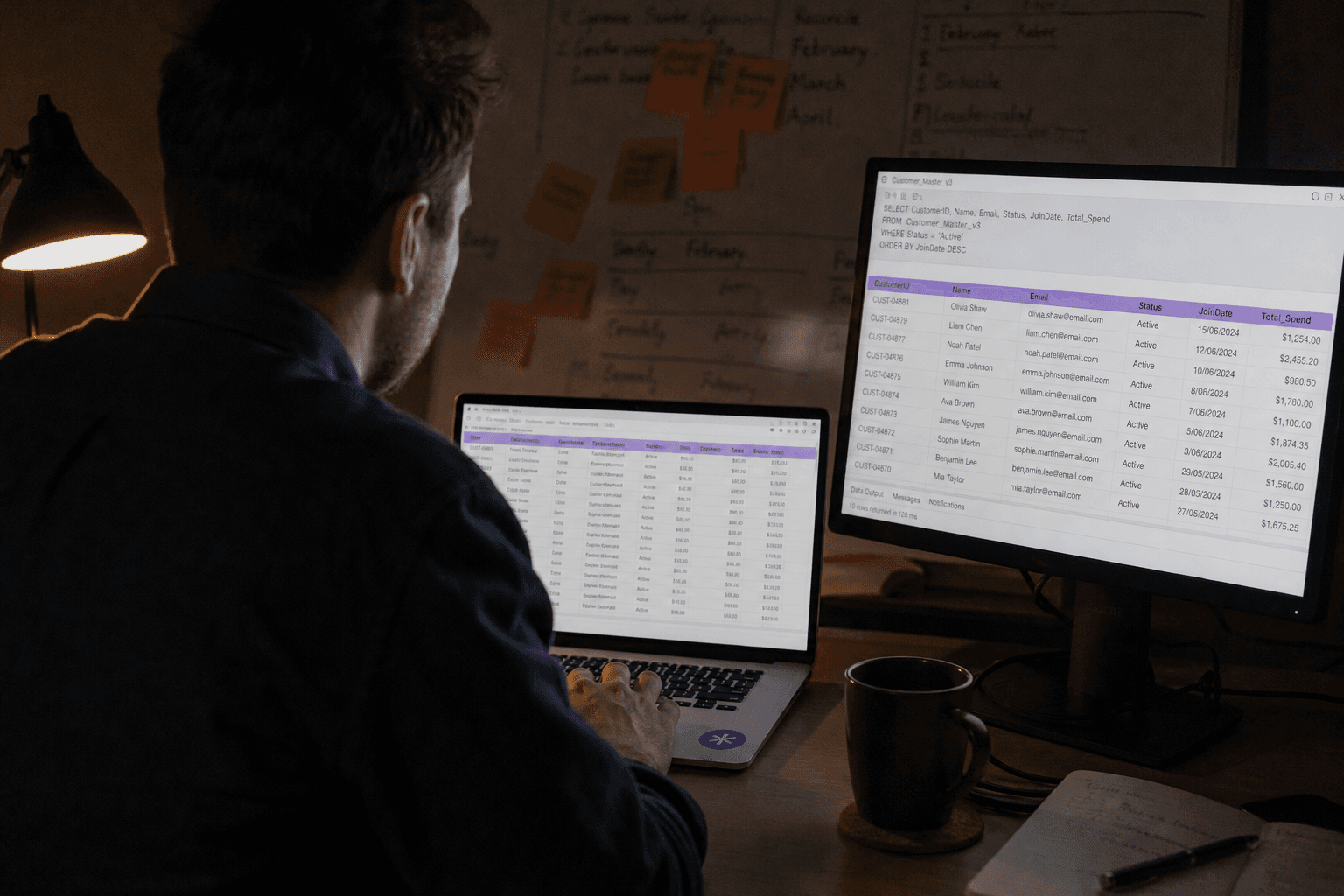
Many growing Australian businesses have this data, but it sits in disconnected systems: the accounting platform, the CRM, a billing tool, and a handful of spreadsheets that nobody fully trusts. This is a data infrastructure problem before it is a modelling problem. Our data-infrastructure work with clients typically starts here — consolidating source systems and establishing pipelines that keep data current — because a sophisticated forecasting model built on unreliable inputs will simply produce confident, wrong answers faster than a spreadsheet would.
Which Forecasting Models Suit Growing Companies?
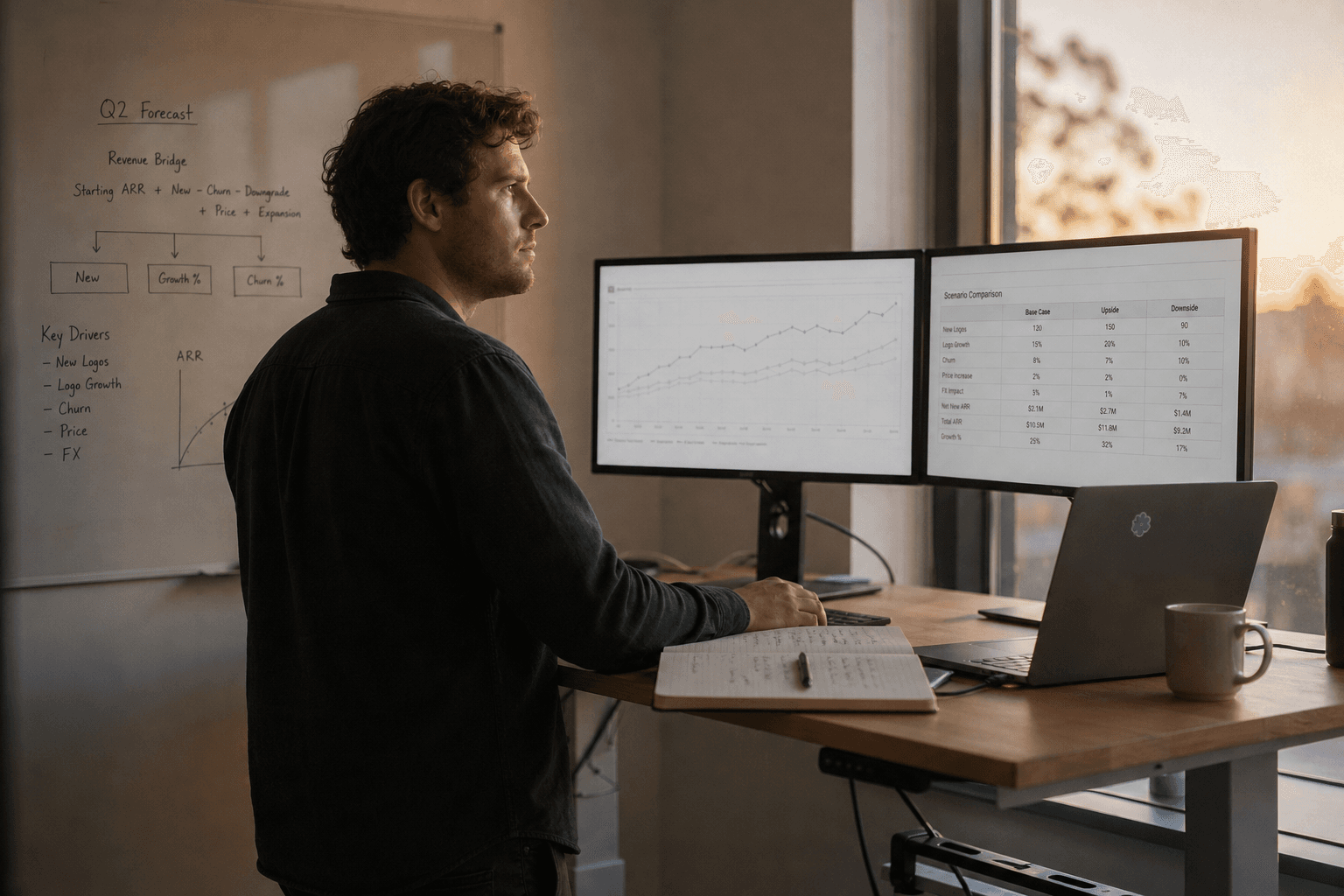
The right model depends on forecast horizon, data volume, and how much the business has changed recently — a company that has changed pricing or gone through an acquisition in the last year needs a different approach than one with several years of stable, repeatable revenue.
| Approach | Best suited to | Data requirement | Interpretability |
|---|---|---|---|
| Driver-based spreadsheet model | Early-stage, few revenue lines, stable unit economics | Low — a few years of financials | High — every assumption is visible |
| Time-series statistical models (e.g. exponential smoothing, ARIMA-family) | Businesses with seasonal or trend-driven revenue and limited structural change | Moderate — consistent historical series | Moderate — assumptions are explainable but less intuitive |
| Machine learning models (e.g. gradient boosting, cohort-based ML) | Multi-line, multi-cohort businesses with many interacting drivers | High — clean, granular historical and operational data | Lower — requires explainability tooling to interpret drivers |
| Hybrid (ML-generated base case, finance-adjusted) | Most growing businesses moving beyond spreadsheets | Moderate to high | Highest practical value — model speed plus human oversight |
For most growing companies, the hybrid approach is the pragmatic choice: an ML model produces a statistically grounded base case and highlights which drivers moved the forecast, while the finance team applies judgement on anything the model cannot know — an upcoming contract renegotiation, a planned price change, a known customer churn risk.
Where Does Human Judgement Still Need to Lead?
Machine learning models are good at finding patterns in historical data; they are not good at reasoning about events that have not happened before. Judgement needs to lead whenever a forecast depends on information the model cannot see — a competitor's pricing move, a regulatory change, a major customer conversation, or a strategic decision like entering a new market.
It is also worth being honest about failure modes. A model trained on two years of consistent growth will struggle to anticipate a demand shock, and a cashflow model that does not account for payment term changes or a large one-off receivable can be confidently wrong. Finance leaders should treat ML forecast outputs as one well-informed input into a decision, reviewed and sense-checked, not as an automatic answer the board can act on unquestioned. This is the same principle that applies to any production AI system: the technology extends what a team can do, but accountability for the decision stays with the people making it.
How Do You Get Started Without Overbuilding?
The most common mistake growing companies make is trying to build a sophisticated forecasting model before the data infrastructure underneath it is sound. A better sequence is to first get financial and operational data into a single, reliable structure, then pilot a hybrid model on one forecast — typically cashflow, since the inputs are usually cleaner than multi-line revenue — before expanding scope.
Because every finance function's systems, chart of accounts, and reporting cadence are different, this is rarely a problem a generic off-the-shelf tool solves well out of the box — it typically needs tailoring to the business's specific data and assumptions, which is where a hands-on engagement earns its keep over a one-size-fits-all product. Techniques like retrieval-augmented generation, which ground AI outputs in a company's own proprietary data rather than general knowledge, are increasingly relevant here too — for example, a finance assistant that can answer questions about forecast drivers using your actual general ledger and pipeline data, rather than generic commentary. If you're exploring how that fits your stack, our ai-engineering team can help scope what's genuinely achievable versus what sounds good in a vendor demo.
For finance and technology leaders weighing up priorities, it's also worth reading more broadly on how ai-product-strategy work gets prioritised against other technology investments, and browsing our insights for related thinking on data foundations and AI adoption.
If you're exploring AI-augmented forecasting for your finance function, we can help assess whether your data is ready, which models fit your business, and where your team's judgement should stay firmly in the loop.
Chris Kerr
Partner at Horizon Labs, an AI product consultancy and venture studio. A commercially focused product and technology leader with 20+ years building and scaling digital platforms, teams, and businesses across SaaS, travel, eCommerce, logistics and transport, and digital marketing — operating at the intersection of product, engineering, and data. Writes about platform strategy, AI transformation, modern data ecosystems, and the operational discipline that separates AI demos from AI products.