SOC 2 Compliance for AI-Powered Applications: A Technical Guide
SOC 2 compliance for AI applications requires addressing traditional security controls alongside AI-specific risks like model governance and training data handling. This technical guide covers the key implementation strategies for building compliant AI systems.

SOC 2 Compliance for AI-Powered Applications: A Technical Guide
SOC 2 compliance for AI-powered applications requires addressing traditional security controls alongside AI-specific risks like model governance, training data handling, and inference logging. The framework evaluates how organisations safeguard customer data through five trust service criteria, but AI introduces new complexities around data lineage, model transparency, and automated decision-making that auditors increasingly scrutinise.
For CTOs and engineering leaders building AI features into existing products, achieving SOC 2 compliance isn't just about checking boxes — it's about implementing robust controls that scale with your AI capabilities while maintaining operational efficiency.
What Makes AI Applications Different for SOC 2
AI applications differ from traditional software in how they process, store, and generate data. Unlike deterministic applications where inputs produce predictable outputs, AI systems learn from training data and make probabilistic predictions. This introduces several compliance challenges that traditional SOC 2 frameworks weren't designed to address.
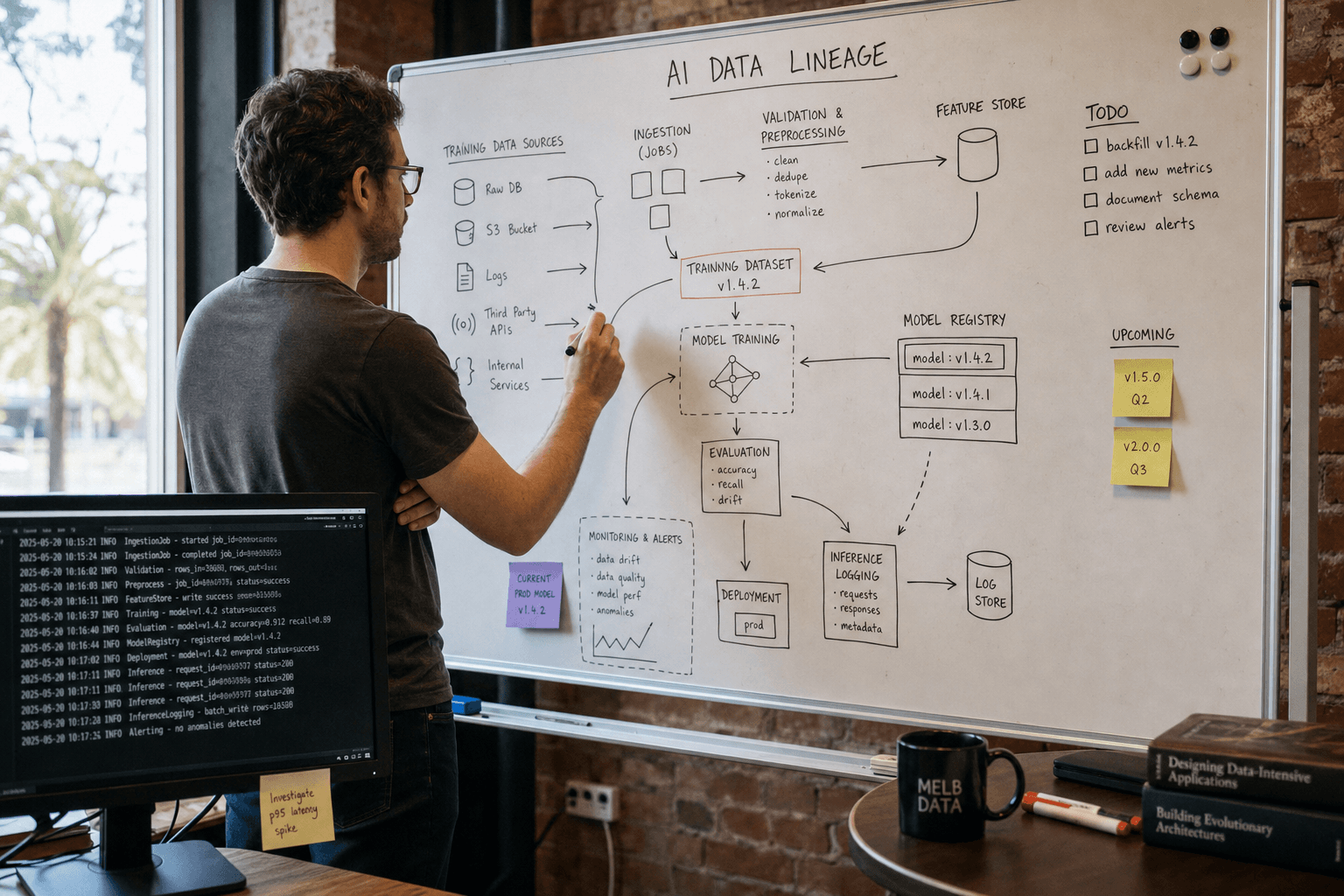
Key differences include:
- Data lineage complexity: Training data may come from multiple sources, require preprocessing, and undergo transformations that traditional audit trails don't capture
- Model versioning: Unlike code deployments, model updates can change application behaviour without code changes
- Inference logging: AI systems generate predictions that need auditing, but logging every inference can create massive data volumes
- Bias and fairness: Automated decisions may have discriminatory impacts that create compliance risks beyond data security
SOC 2 Trust Service Criteria Applied to AI
Security Controls for AI Systems

Security controls for AI systems must protect both the traditional application infrastructure and AI-specific components like model artifacts, training pipelines, and inference engines. The primary focus areas include access controls, data encryption, and network security.
Implement role-based access controls that separate model training, deployment, and monitoring responsibilities. Training data should be encrypted at rest and in transit, with separate encryption keys for different data classifications. Model artifacts require versioning and access logging to track who can deploy which models to production.
Network segmentation becomes critical when training occurs on different infrastructure than production inference. Consider air-gapped training environments for sensitive models, with controlled promotion pathways to production systems.
Availability Through Model Monitoring
Availability for AI applications means ensuring both system uptime and model performance. Traditional uptime monitoring must be supplemented with model-specific health checks that detect performance degradation, data drift, and prediction accuracy decline.
Implement automated model performance monitoring that tracks accuracy, latency, and throughput metrics. Set up alerts for statistical drift in input data that might indicate model degradation. Establish fallback mechanisms when primary models fail — this might mean reverting to previous model versions or switching to rule-based alternatives.
Document model refresh procedures and maintain rollback capabilities. Unlike traditional software where bugs are obvious, model performance can degrade gradually and subtly.
Processing Integrity in AI Workflows
Processing integrity ensures that AI systems process data accurately and completely according to business requirements. For AI applications, this means validating data pipelines, model training procedures, and inference accuracy.
Implement data validation checks at every stage of your ML pipeline. Training data should be validated for completeness, accuracy, and consistency before model training begins. Establish automated testing for model outputs using known test datasets.
Maintain audit trails for all data transformations and model training runs. This includes tracking hyperparameters, training configurations, and validation results. Version control all training code, model artifacts, and deployment configurations.
Confidentiality and Data Governance
Confidentiality controls must address how AI systems handle customer data throughout the ML lifecycle. This includes data collection, preprocessing, training, inference, and disposal.
Classify all data used in AI workflows according to sensitivity levels. Customer PII requires different handling than aggregated analytics data. Implement data minimisation principles — only collect and process data necessary for your AI use case.
Establish clear data retention policies for training data, model artifacts, and inference logs. Consider the right to be forgotten requirements and how they apply to trained models that may have learned from individual customer data.
Organisations typically implement different retention periods and access controls for various data types. Training data might be retained longer than inference logs, while model artifacts require careful versioning for compliance audits. The specific requirements depend on your industry regulations, privacy policies, and business needs.
Privacy Controls for AI Systems
Privacy controls ensure customer data is collected, used, and disclosed according to stated privacy policies. AI systems often require extensive data collection and processing, making privacy compliance particularly complex.
Implement privacy-by-design principles in your AI architecture. This means considering privacy implications during system design, not as an afterthought. Use techniques like differential privacy or federated learning where appropriate to minimise privacy risks.
Technical Implementation Strategies
Data Pipeline Security
Secure your data pipelines from ingestion to model training. Implement data validation at ingestion points to ensure data quality and detect potential security issues. Use checksums and data lineage tracking to verify data integrity throughout processing.
Encrypt all data at rest and in transit. Consider tokenisation for sensitive data that needs to flow through multiple systems. Implement secure data deletion procedures that account for data replicated across training and inference systems.
Model Lifecycle Management
Establish controlled model deployment processes with approval workflows. Implement A/B testing frameworks that allow safe model rollouts with quick rollback capabilities. Maintain model registries that track versions, performance metrics, and compliance status.
Document all model training procedures, including data sources, preprocessing steps, and hyperparameter configurations. This documentation becomes critical during audits and helps ensure reproducible model builds.
Audit Trail Implementation
Maintain comprehensive logs for all AI system activities. This includes data access logs, model training events, deployment activities, and inference requests. Design logging systems that capture sufficient detail for audit purposes without creating performance bottlenecks.
Implement log aggregation and monitoring systems that can detect unusual patterns or potential security incidents. Consider using immutable log storage to prevent tampering.
Common Compliance Challenges
Model Explainability
Auditors increasingly ask about AI decision-making processes. While SOC 2 doesn't explicitly require explainable AI, being able to explain model decisions supports the processing integrity criterion.
Implement model explainability tools appropriate for your AI use cases. Document the business logic behind model outputs and maintain records of model validation procedures.
Third-Party AI Services
Using external AI APIs introduces additional compliance considerations. Ensure third-party providers meet your SOC 2 requirements and maintain appropriate data processing agreements.
Implement monitoring for third-party service availability and performance. Have contingency plans for third-party service outages that don't compromise your compliance posture.
Data Residency and Sovereignty
AI training often requires substantial compute resources that may be located in different jurisdictions. Ensure your data residency requirements are met throughout the ML lifecycle.
Document where customer data is processed during training and inference. Implement controls to prevent unauthorised data transfers across jurisdictions.
Building Compliance-Ready AI Infrastructure
Infrastructure Design Principles
Design your AI infrastructure with compliance in mind from the start. Separate training and production environments with controlled promotion processes. Implement network segmentation that isolates sensitive AI workloads.
Use infrastructure-as-code approaches that provide audit trails for infrastructure changes. Implement automated security scanning for AI-specific vulnerabilities and misconfigurations.
Monitoring and Alerting
Establish comprehensive monitoring that covers both traditional system metrics and AI-specific performance indicators. Monitor for data drift, model performance degradation, and unusual inference patterns.
Implement alerting systems that notify appropriate teams of potential compliance issues. This includes unusual data access patterns, model performance anomalies, and security incidents.
Documentation and Evidence Collection
Maintain detailed documentation of your AI systems, including architecture diagrams, data flow documentation, and security control descriptions. This documentation proves critical during SOC 2 audits.
Implement automated evidence collection for compliance reporting. Many compliance activities can be automated, reducing the burden on engineering teams while improving audit readiness.
Australian Regulatory Considerations
Australian organisations must consider local privacy laws alongside SOC 2 requirements. The Privacy Act 1988 includes provisions for automated decision-making that may affect your AI compliance approach.
Stay informed about emerging AI governance frameworks in Australia. The Australian Government is developing AI safety standards that may impact future compliance requirements.
Getting Started with AI SOC 2 Compliance
Start by conducting a gap analysis of your current AI systems against SOC 2 requirements. Focus initially on the most critical controls around data security and access management.
Develop a phased compliance roadmap that addresses high-risk areas first. Consider engaging compliance experts who understand both SOC 2 requirements and AI system complexities.
Implement robust logging and monitoring early in your AI development process. It's much easier to build compliance into systems from the start than to retrofit it later.
For organisations building AI-powered applications, SOC 2 compliance requires thoughtful planning and technical implementation. The key is understanding how traditional security controls apply to AI systems while addressing new risks that AI introduces.
Our AI engineering and application modernisation capabilities help organisations build compliant AI systems from the ground up. We work with your team to implement the technical controls and documentation processes that auditors expect to see.
Ready to build SOC 2-compliant AI applications? Get in touch to discuss your compliance requirements and technical architecture.
Chris Kerr
Partner at Horizon Labs, an AI product consultancy and venture studio. A commercially focused product and technology leader with 20+ years building and scaling digital platforms, teams, and businesses across SaaS, travel, eCommerce, logistics and transport, and digital marketing — operating at the intersection of product, engineering, and data. Writes about platform strategy, AI transformation, modern data ecosystems, and the operational discipline that separates AI demos from AI products.