AI and Intellectual Property: Who Owns What When AI Generates Content?
AI-generated content creates complex ownership questions that traditional Australian IP law wasn't designed to handle. Understanding these challenges is critical for protecting investments and avoiding disputes.

AI and Intellectual Property: Who Owns What When AI Generates Content?
AI-generated content creates complex ownership questions that traditional intellectual property law wasn't designed to handle. In Australia, the Copyright Act 1968 requires human authorship for copyright protection, while patent law demands human inventors — leaving AI outputs in a legal grey area that businesses must navigate carefully.
As organisations increasingly adopt AI for code generation, content creation, and product development, understanding IP ownership becomes critical for protecting investments and avoiding disputes.
Current State of AI IP Law in Australia
Australian intellectual property law currently operates on the principle of human creation. The Copyright Act 1968 grants copyright to "authors" — traditionally understood as human beings. Similarly, the Patents Act 1990 requires a human inventor to be named on patent applications.

This creates immediate challenges for AI-generated outputs:
- Copyright: AI-generated text, images, or code may lack copyright protection entirely
- Patents: Inventions created by AI systems cannot currently be patented in Australia
- Trade secrets: AI-generated processes and algorithms may qualify for trade secret protection
- Moral rights: Only humans can claim moral rights over creative works
IP Australia, the government body overseeing intellectual property, has indicated they are monitoring AI developments but hasn't yet updated legislation to address AI-generated works specifically.
Who Owns AI-Generated Code?
Code generation presents particularly complex ownership questions for software development teams. When GitHub Copilot suggests code snippets or ChatGPT writes functions, several parties could claim ownership.
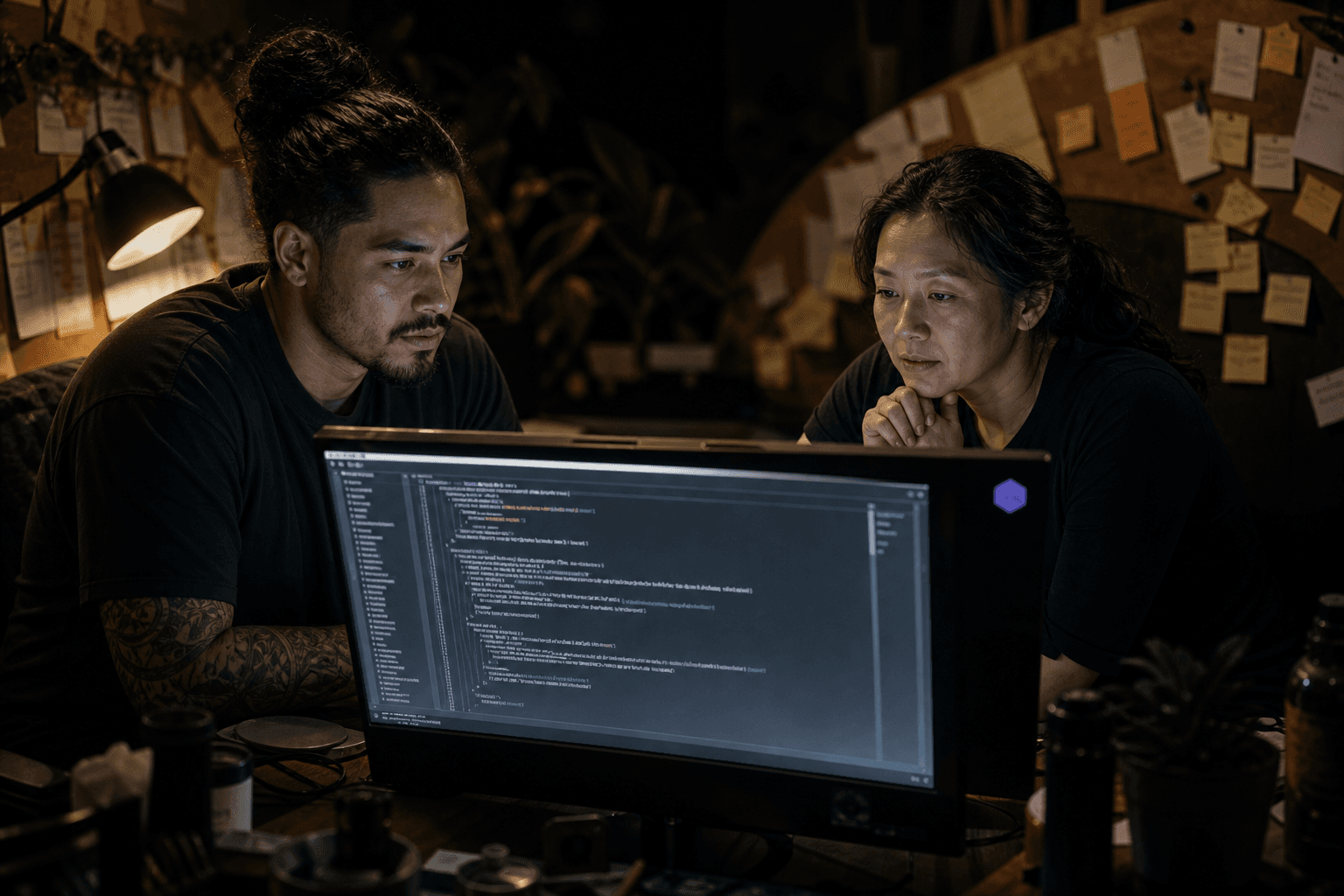
In practice, most organisations treat AI-generated code similarly to code written with any other development tool — ownership typically flows to the programmer and their employer through standard employment contracts. The programmer's role in crafting prompts, selecting outputs, and integrating code adds the human creativity element that courts generally require for IP protection.
However, this approach carries risks. If AI-generated code incorporates copyrighted material from training data, the resulting code could infringe existing copyrights. The legal landscape remains uncertain, with potential claims from:
- Developers and employers: Based on human creativity in prompts and selection
- Original code authors: Whose work may have been used in AI training
- AI platform providers: Through terms of service agreements
The strength of these competing claims varies case by case and remains largely untested in Australian courts.
Contract Clauses for AI Development
Smart organisations are updating their contracts to address AI-generated content explicitly. Essential clauses include:
Employment Contracts
Employee acknowledges that any work product created with the assistance of artificial intelligence tools remains the property of [Company]. Employee warrants that such AI-assisted work does not infringe third-party intellectual property rights.
Client Service Agreements
[Service Provider] may use AI tools in delivering services. Client acknowledges that AI-generated deliverables may not qualify for copyright protection under current Australian law. [Service Provider] warrants reasonable efforts to ensure AI outputs do not infringe third-party rights.
Vendor Agreements
Vendor represents that any AI tools used comply with applicable licensing terms and that resulting deliverables will not subject Client to copyright infringement claims.
These clauses shift risk appropriately while acknowledging legal uncertainty.
Practical Risk Management Strategies
Organisations can reduce AI IP risks through several practical measures:
Document AI Usage: Maintain records of which AI tools are used, when, and for what purposes. This creates an audit trail for IP decisions and demonstrates human oversight.
Review AI Tool Terms: Different AI platforms have varying terms regarding ownership and usage rights. Some claim royalty-free licenses to user inputs and outputs — understanding these terms is crucial for risk assessment.
Implement Review Processes: Have humans review AI-generated content before incorporating it into products or services. This adds the human creativity element that strengthens IP claims under current law.
Consider Code Scanning: Use tools that detect potential copyright issues in AI-generated code before deployment. While not foolproof, these tools can identify obvious similarities to existing codebases.
Update IP Policies: Revise internal policies to address AI-generated content explicitly, including approval processes and risk thresholds that align with your organisation's risk tolerance.
Training and Awareness: Ensure development teams understand the IP implications of AI tool usage and follow consistent practices across projects.
International Considerations
AI IP law varies significantly across jurisdictions, creating additional complexity for Australian businesses operating internationally:
- United States: Courts have ruled that AI cannot be an "author" for copyright purposes, but human-directed AI use may qualify for protection
- United Kingdom: Considering "computer-generated works" provisions that could protect certain AI outputs
- European Union: Developing comprehensive AI regulation that may impact IP rights and liability
Content that lacks protection in Australia might be protected elsewhere, or vice versa. This patchwork approach requires careful consideration for businesses with international operations or customers.
Future Legal Developments
Australian law will likely evolve to address AI-generated content as the technology becomes more prevalent. Potential changes being discussed include:
- Sui generis rights: New categories of protection specifically for AI outputs, similar to database rights in the EU
- Attribution requirements: Mandatory disclosure when AI tools are used in creating content or products
- Liability frameworks: Clearer rules about who bears responsibility for AI-generated content that infringes existing rights
- Fair use expansions: Broader exceptions for AI training and output generation, balancing innovation with creator rights
The Australian Law Reform Commission and IP Australia are actively considering these issues, with industry consultation expected in coming years. Businesses should monitor these developments and participate in consultation processes where relevant.
Recommendations for Businesses
Until the law catches up with technology, businesses should adopt a cautious but practical approach:
-
Assume limited protection: Treat AI-generated content as potentially unprotectable by copyright, focusing on trade secrets and human-enhanced works
-
Add substantial human input: Ensure meaningful human creativity and review in all AI-assisted work to strengthen IP claims
-
Document processes: Maintain clear records of how AI tools are used and how human creativity is applied
-
Update agreements: Include AI-specific clauses in employment, client, and vendor contracts
-
Monitor developments: Stay informed about legal changes and industry best practices as this area evolves rapidly
-
Seek legal advice: Consult IP lawyers for significant AI implementations or when IP protection is critical to business value
At Horizon Labs, we help organisations navigate these complex questions through our AI product strategy and AI engineering services. Our approach ensures AI implementations consider IP implications from the outset, protecting your investments while enabling innovation.
The intersection of AI and intellectual property will continue evolving as technology advances and law adapts. Organisations that proactively address these challenges will be better positioned to capture the benefits of AI while managing the associated risks.
Ready to develop an AI strategy that protects your intellectual property? Get in touch to discuss how we can help navigate these complex challenges while building AI capabilities that drive real business value.
Chris Kerr
Partner at Horizon Labs, an AI product consultancy and venture studio. A commercially focused product and technology leader with 20+ years building and scaling digital platforms, teams, and businesses across SaaS, travel, eCommerce, logistics and transport, and digital marketing — operating at the intersection of product, engineering, and data. Writes about platform strategy, AI transformation, modern data ecosystems, and the operational discipline that separates AI demos from AI products.