Securing API Endpoints for AI Applications: OWASP Best Practices
AI APIs require layered security addressing traditional vulnerabilities and AI-specific threats like prompt injection and model extraction. Learn OWASP best practices for protecting endpoints from data breaches and service disruption.

Securing API Endpoints for AI Applications: OWASP Best Practices
API security for AI applications requires a layered approach that addresses both traditional web vulnerabilities and AI-specific attack vectors. Following OWASP API Security Top 10 guidelines while implementing AI-focused controls protects your endpoints from data breaches, model poisoning, and service disruption.
Why AI API Security Differs from Traditional APIs
AI APIs handle sensitive training data, expose expensive computational resources, and can leak proprietary model information through carefully crafted queries. Unlike traditional REST APIs that return structured data, AI endpoints process unstructured inputs and generate dynamic outputs that create new attack surfaces.

Traditional API security focuses on data access control and rate limiting. AI API security must additionally prevent prompt injection attacks, model extraction attempts, and adversarial inputs designed to manipulate model behaviour or extract training data.
Authentication and Authorisation for AI Endpoints
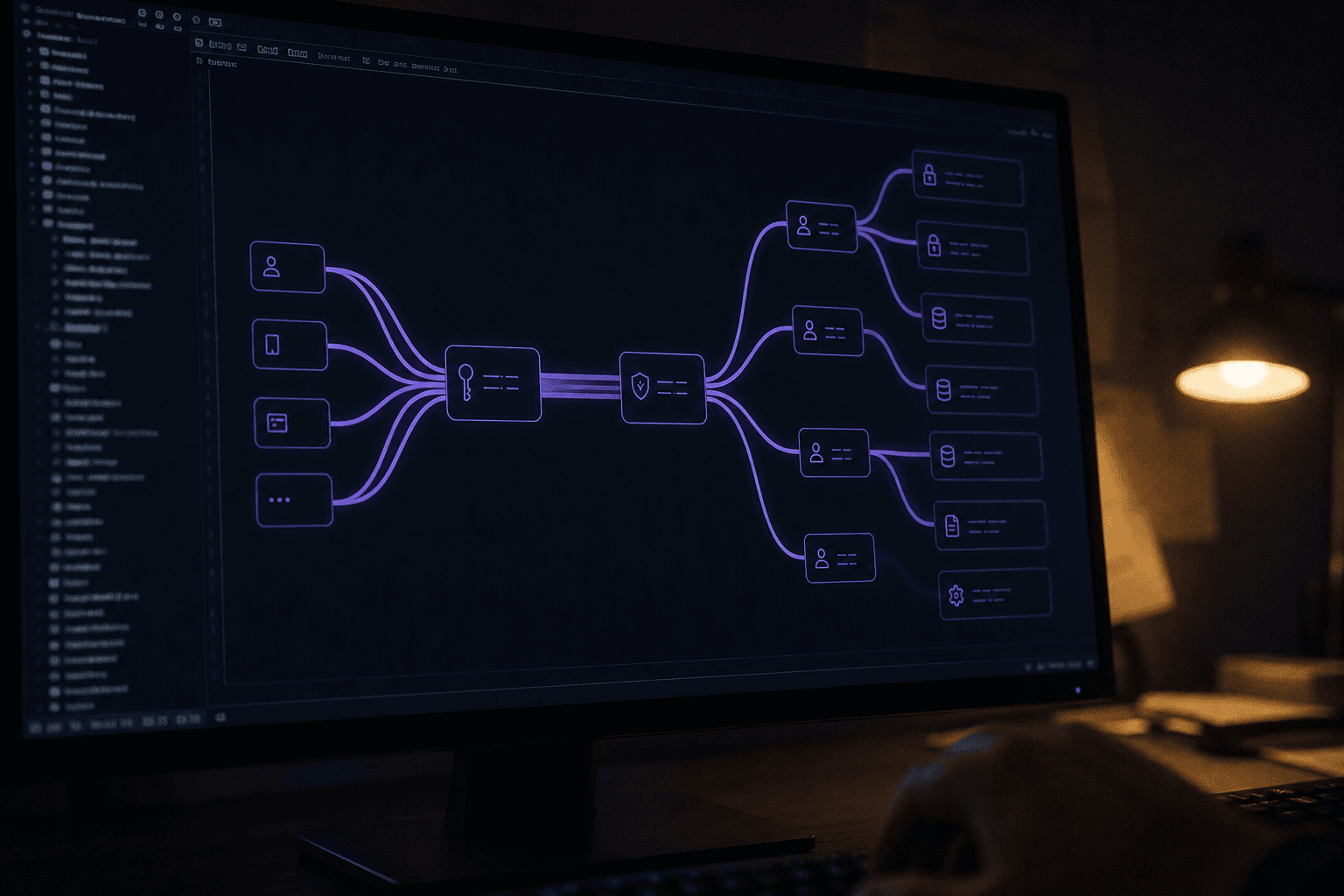
Implement multi-layered authentication that validates both user identity and request context. Use OAuth 2.0 or API keys for service-to-service communication, combined with JWT tokens that include user permissions and usage quotas.
# Example: JWT validation with AI-specific claims
def validate_ai_request(token, model_access_level):
    payload = jwt.decode(token, SECRET_KEY)
    if payload['model_tier'] < model_access_level:
        raise AuthorizationError("Insufficient model access")
    return payload['user_id']
Create role-based access controls that distinguish between different AI capabilities. A user might access basic text generation but not advanced code generation or sensitive data analysis models.
Rate Limiting and Resource Protection
AI inference consumes significant computational resources, making rate limiting critical for cost control and service availability. Implement multiple rate limiting layers based on user tier, model complexity, and resource consumption.
Use adaptive rate limiting that considers request complexity. A simple text classification request should have different limits than a complex image generation task. Monitor GPU utilisation and queue depth to implement dynamic throttling during peak usage.
Common rate limiting approaches include token bucket algorithms for handling traffic bursts, sliding window implementations for smooth traffic control, and resource-based limiting that monitors actual computational costs. Each serves different use cases depending on your application's needs and user patterns.
Consider implementing backpressure mechanisms that gracefully degrade service quality rather than rejecting requests outright. This might mean switching to smaller models or reducing output quality during high load periods.
Input Validation and Sanitisation
Validate all inputs against expected schemas before passing them to AI models. This prevents both traditional injection attacks and AI-specific threats like prompt injection or adversarial inputs designed to extract training data.
# Input validation example
def validate_prompt_input(user_input):
    # Length limits
    if len(user_input) > MAX_PROMPT_LENGTH:
        raise ValidationError("Input too long")

    # Content filtering
    if contains_injection_patterns(user_input):
        raise SecurityError("Potential prompt injection detected")

    # Encoding validation
    if not is_valid_utf8(user_input):
        raise ValidationError("Invalid character encoding")
Implement content filtering that detects prompt injection attempts, jailbreaking patterns, and requests for sensitive information. Use both rule-based filters and ML-based detection for comprehensive coverage.
Sanitise file uploads rigorously. AI applications often accept images, documents, or code files that could contain malicious payloads. Validate file types, scan for malware, and process uploads in isolated environments.
Output Sanitisation and Information Leakage Prevention
AI models can inadvertently expose training data, API keys, or system information through their outputs. Implement output filtering that removes sensitive patterns before returning responses to users.
Monitor for model extraction attempts where attackers use carefully crafted queries to reverse-engineer your model architecture or training data. Implement query pattern detection and response analysis to identify suspicious behaviour.
# Output sanitisation example
def sanitise_ai_output(model_response):
    # Remove potential sensitive data
    sanitised = remove_api_keys(model_response)
    sanitised = remove_email_addresses(sanitised)
    sanitised = remove_training_data_leakage(sanitised)

    return sanitised
Log all AI interactions for security auditing while ensuring logs themselves don't contain sensitive information. Hash or tokenise personally identifiable information in logs.
Monitoring and Threat Detection
Implement comprehensive monitoring that tracks both technical metrics and security events. Monitor for unusual query patterns, repeated similar requests that might indicate scraping attempts, and responses that trigger content filters.
Set up alerts for authentication failures, rate limit breaches, and suspicious input patterns. Use SIEM integration to correlate AI API events with broader security monitoring.
Key metrics to monitor include:
- Request volume and patterns by user/IP
- Model inference times and resource usage
- Failed authentication attempts
- Content filter triggers
- Unusual query similarity (potential model extraction)
OWASP API Security Top 10 for AI Applications
The OWASP API Security Top 10 provides a framework for securing AI APIs. Each vulnerability requires AI-specific considerations:
API1: Broken Object Level Authorization - Ensure users can only access their own AI model instances, conversation histories, and generated content. Implement strict resource isolation between tenants.
API2: Broken Authentication - Use strong authentication mechanisms and validate session tokens properly. AI APIs are attractive targets due to their computational value.
API3: Broken Object Property Level Authorization - Control which model parameters users can modify and which outputs they can access. Not all users should see confidence scores or intermediate results.
API4: Unrestricted Resource Consumption - Critical for AI APIs due to high computational costs. Implement both request-level and user-level resource quotas.
API5: Broken Function Level Authorization - Separate access to different AI capabilities (text generation vs image analysis vs code completion). Users shouldn't access administrative functions like model retraining.
Australian Regulatory Considerations
Australian organisations must consider the Privacy Act 1988 when processing personal information through AI APIs. Implement data minimisation principles and ensure proper consent mechanisms for AI processing of personal data.
The Australian Cyber Security Centre (ACSC) provides guidelines for securing cloud services that apply to AI API deployments. Follow their recommendations for encryption, access controls, and incident response.
Consider upcoming AI governance frameworks being developed by Australian regulators. Implement logging and audit trails that support compliance reporting and ethical AI principles.
Building Secure AI APIs in Production
Securing AI APIs requires ongoing attention as threat landscapes evolve. Start with OWASP fundamentals, add AI-specific protections, and continuously monitor for new attack patterns.
Regular security assessments should include both traditional penetration testing and AI-specific red team exercises that attempt prompt injection, model extraction, and adversarial attacks.
Implement defense in depth with multiple security layers rather than relying on single controls. AI applications are complex systems where failures can cascade, making redundant security measures essential.
Building secure AI infrastructure requires expertise across traditional cybersecurity, AI/ML operations, and cloud architecture. Our AI engineering team helps Australian organisations implement production-ready AI systems with security built-in from the start.
Whether you're modernising legacy systems to integrate AI capabilities or building new AI-powered platforms, proper security architecture is essential for protecting both your data and your customers. Learn more about our approach to AI product strategy and how we help companies navigate the security challenges of AI adoption.
Ready to discuss your AI security requirements? Get in touch to start a conversation about building secure, scalable AI systems for your organisation.
Chris Kerr
Partner at Horizon Labs, an AI product consultancy and venture studio. A commercially focused product and technology leader with 20+ years building and scaling digital platforms, teams, and businesses across SaaS, travel, eCommerce, logistics and transport, and digital marketing — operating at the intersection of product, engineering, and data. Writes about platform strategy, AI transformation, modern data ecosystems, and the operational discipline that separates AI demos from AI products.