International Expansion Architecture for Australian SaaS
Expanding an Australian SaaS platform overseas means re-architecting infrastructure, data residency, tenancy, billing, and AI features together — not as a configuration change. This guide sets out the key architecture decisions and privacy obligations CTOs need to work through first.

International expansion architecture for an Australian SaaS platform means re-engineering four things at once: where infrastructure and customer data sit, how authentication and tenancy handle multiple jurisdictions, how billing and tax work across currencies, and how AI features adapt to new languages, new data, and new privacy regimes. None of these is solved with a configuration toggle — each requires a deliberate architecture decision before the first overseas customer contract is signed. This guide sets out what those decisions look like in practice for Australian SaaS teams, and where obligations under the Australian Privacy Principles intersect with the technical build.
What does multi-region architecture actually mean for a SaaS platform?
Multi-region architecture is the practice of deploying application infrastructure, data storage, and supporting services across more than one geographic cloud region so that a platform can serve users, meet data residency requirements, and maintain performance in multiple markets simultaneously. For a platform that has run happily in a single AWS or Azure region since launch, this is a genuine re-architecture — not a configuration toggle. It typically touches your deployment pipeline, your data layer, your authentication and tenancy model, and your monitoring stack all at once.
Much of this work overlaps with what we'd otherwise call application modernisation: decomposing tightly coupled services, introducing regional data partitioning, and making sure the platform can be deployed and observed consistently across environments. Teams that have already paid down technical debt in these areas tend to find multi-region work materially easier than teams still running a single monolith with implicit assumptions about where data lives.

The trigger is usually commercial before it's technical: a customer in New Zealand, the UK, or Southeast Asia asks where their data will be stored, or a prospect's procurement team requires local data residency as a contract condition. By the time that question lands on your desk, the architecture decision is already overdue — which is why it's worth scoping this work as part of your technology roadmap well ahead of the first international sales conversation, not in response to it.
What are the data residency and privacy obligations when expanding overseas?
If your platform expands into new regions, you will almost certainly need to move personal information across borders — to overseas cloud regions, to overseas customers, or to overseas AI and LLM providers. This is the clearest compliance thread for Australian SaaS companies going international, and it needs to be treated as a day-one architecture constraint, not a legal afterthought.
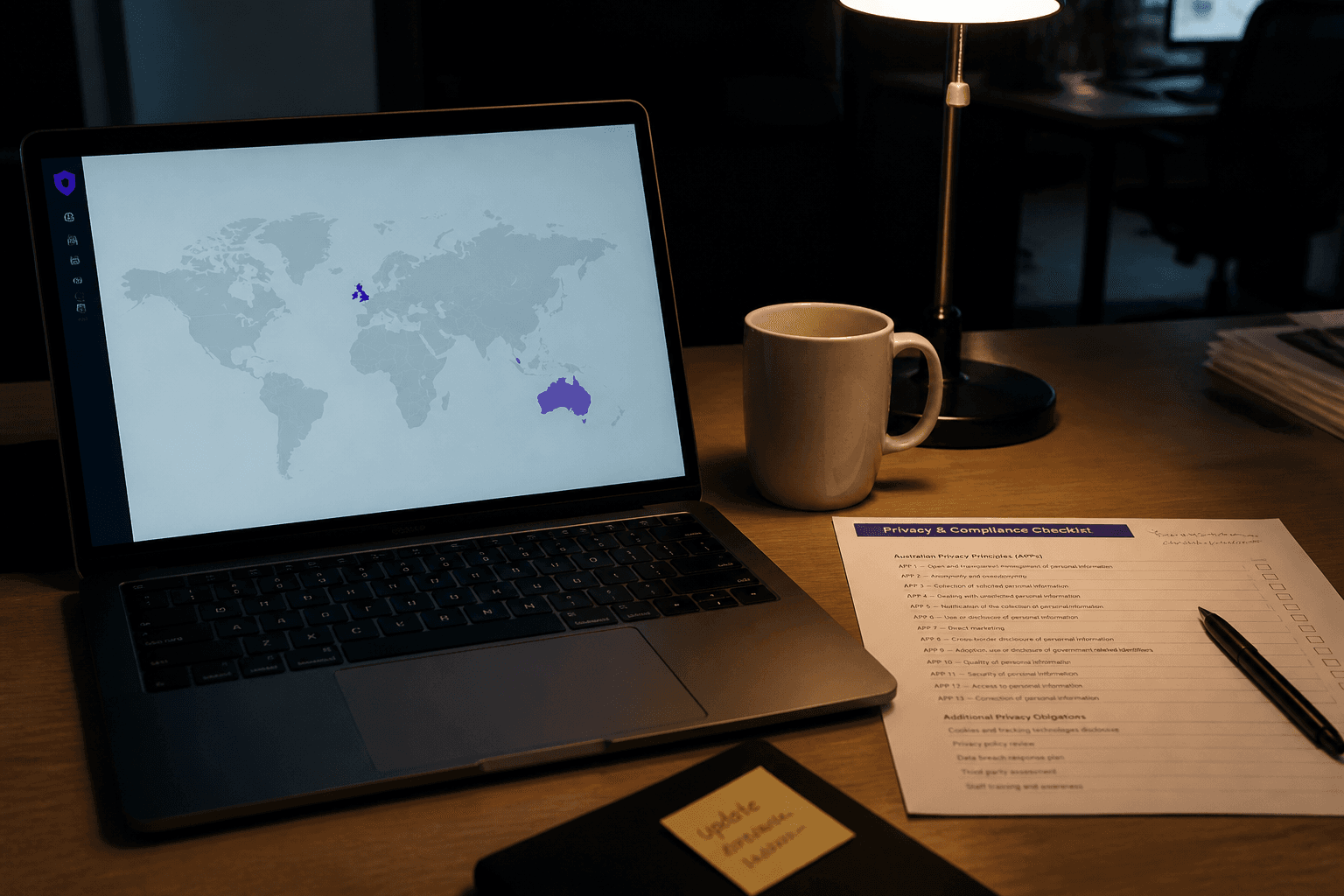
Australian Privacy Principle 8 (APP 8) creates specific obligations when an organisation sends personal information overseas, and this applies whether the data is moving to a cloud region, a customer's local systems, or a third-party API. Notably, sending personal data to overseas LLM APIs — many of the major large language model platforms are hosted in the US — can itself trigger APP 8 obligations, which is easy to overlook if your AI features were built assuming a purely domestic customer base. If you're planning AI features as part of an international rollout, this is worth working through as part of your ai product strategy rather than bolting on after launch.
The OAIC, which administers the APPs, has signalled a stronger enforcement posture and is coordinating with other regulators through the Digital Platform Regulators Forum. Practically, this means multi-region expansion is a compliance exercise from the outset, not something you retrofit once the technical architecture is settled. Data residency decisions, vendor contracts, and AI provider selection all need to be made with APP 8 in view — and documented, so that when a customer or regulator asks where data flows, you have a clear answer rather than a reconstruction exercise.
For teams building or extending AI capability as part of this work, our ai engineering practice covers how to architect AI features so that model choice, data handling, and jurisdictional constraints are decided together, rather than the AI feature being designed first and the compliance question asked afterwards.
How should multi-currency and tax handling be architected?
Multi-currency billing is the capability to price, invoice, and reconcile revenue in more than one currency without manual workarounds in finance. Tax handling for international SaaS typically means supporting different consumption-tax regimes — GST, VAT, and various sales tax structures — with correct rates, exemptions, and remittance obligations applied per jurisdiction. Neither of these is a pure engineering problem. Both require close collaboration between engineering, finance, and legal, because the correct tax treatment for a given customer depends on where they're based, what they're buying, and how your entity is structured in that market — decisions that sit outside engineering but have direct implications for how billing logic is built.
From an architecture perspective, the practical implication is that currency and tax logic should be treated as configurable, jurisdiction-aware data rather than hard-coded assumptions scattered through the billing pipeline. Platforms that bolt multi-currency support onto a billing system designed around a single currency and a single tax regime tend to accumulate reconciliation problems that surface months later, usually during an audit or a finance team's month-end close. Getting the data model right early — separating list price, billed currency, tax jurisdiction, and settlement currency as distinct concepts — avoids a much larger rebuild later.
It's also worth engaging your finance and legal teams early on entity structure. Some jurisdictions require a local entity or registration before you can legally bill customers there, which affects not just tax logic but which payment processors and banking rails are available to you.
Where to start
None of these architecture decisions need to happen in isolation, and none of them need to be perfect before you take on your first overseas customer. What matters is sequencing: understand your data residency obligations first, because they constrain your infrastructure choices; design your tenancy and billing data model to be jurisdiction-aware from the start, even if you only support one region initially; and treat AI features as a first-class part of the compliance conversation, not an exception to it.
If you're working through this for your own platform and want a second opinion on the architecture, get in touch — we're happy to talk through where your platform stands today and what the practical next steps look like.
Chris Kerr
Partner at Horizon Labs, an AI product consultancy and venture studio. A commercially focused product and technology leader with 20+ years building and scaling digital platforms, teams, and businesses across SaaS, travel, eCommerce, logistics and transport, and digital marketing — operating at the intersection of product, engineering, and data. Writes about platform strategy, AI transformation, modern data ecosystems, and the operational discipline that separates AI demos from AI products.