Digital Twins for Manufacturing and Logistics in Australia
Digital twins let manufacturers and logistics operators simulate changes safely and cut downtime — but only once the right sensors and data infrastructure are in place. Here's what Australian operators need before a twin becomes viable, and where AI fits in once it is.
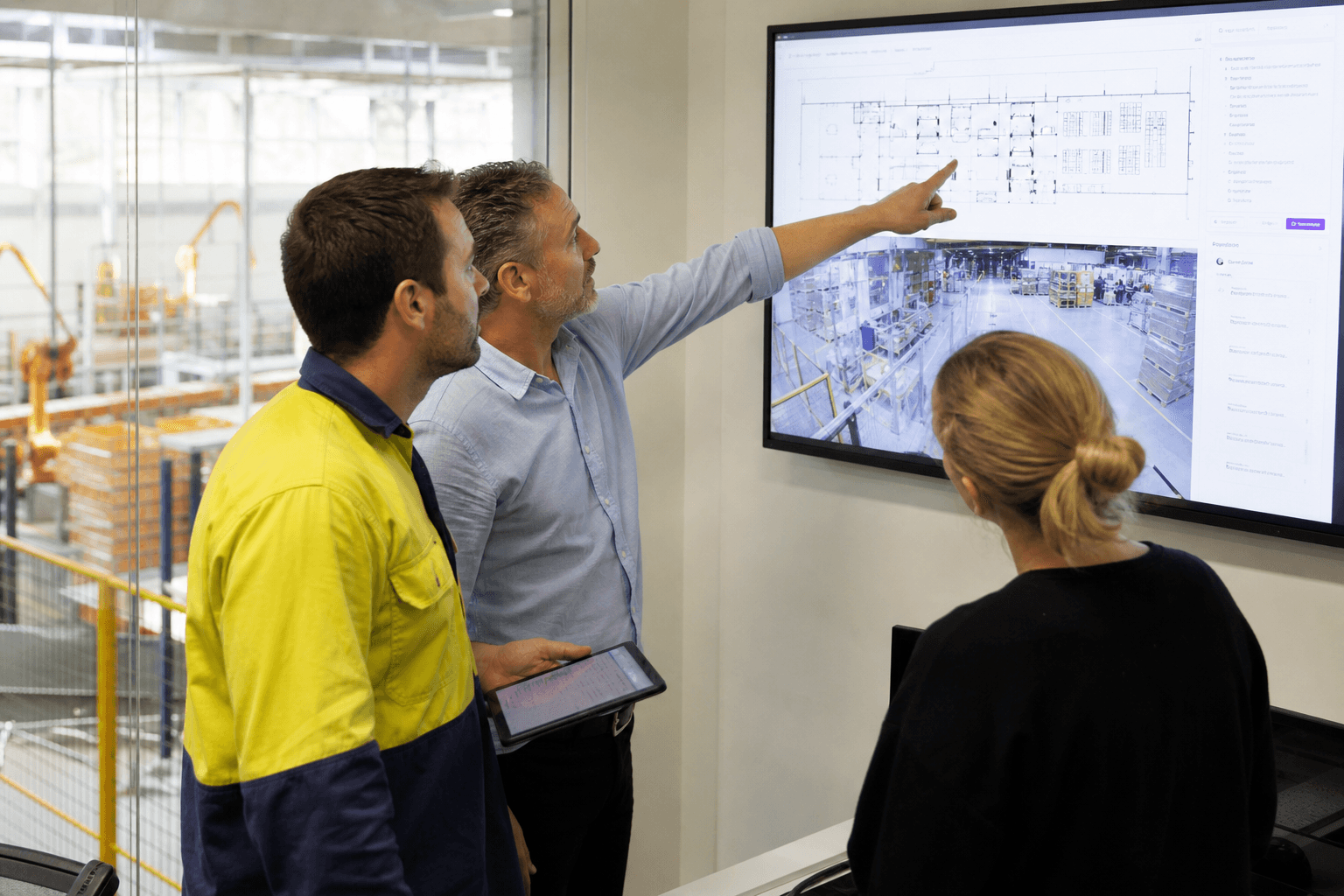
Digital twin technology is moving from pilot projects to production use across Australian manufacturing and logistics operations. The appeal is straightforward: simulate a change before you make it, catch failure modes before they cost a shift's output, and give engineering and operations teams a shared, live model of how the physical system actually behaves. But a digital twin is not something you buy off the shelf and switch on. It is the output of sustained investment in sensors, data infrastructure, and integration work — and getting that foundation wrong is the most common reason digital twin projects stall.
What is a digital twin in a manufacturing or logistics context?
A digital twin is a virtual representation of a physical asset, process, or system that is kept synchronised with real-world data so it can be used to monitor, simulate, and predict behaviour. In manufacturing this might be a twin of a production line; in logistics it might be a twin of a warehouse, a fleet, or an end-to-end distribution network. The defining feature is the live data connection — a static 3D model or simulation built once and never updated is not a digital twin, it's a diagram.
The international standard ISO 23247 defines a reference framework for digital twins in manufacturing, describing the layers required: the observable manufacturing elements (the physical assets and sensors), the data collection and device communication layer, and the digital twin layer itself where simulation and analysis happen. That framework is a useful checklist for any Australian operator scoping a project, because it forces the question of what data actually needs to flow, and how often, before any simulation work begins.
How do digital twins reduce downtime and operational risk?
Digital twins reduce downtime by letting teams test changes — a new scheduling rule, a line reconfiguration, a route change — in simulation before they touch the physical system. This turns high-risk changes into low-risk experiments, and it surfaces failure modes (bottlenecks, contention, capacity limits) that are hard to spot by inspecting the physical system alone.
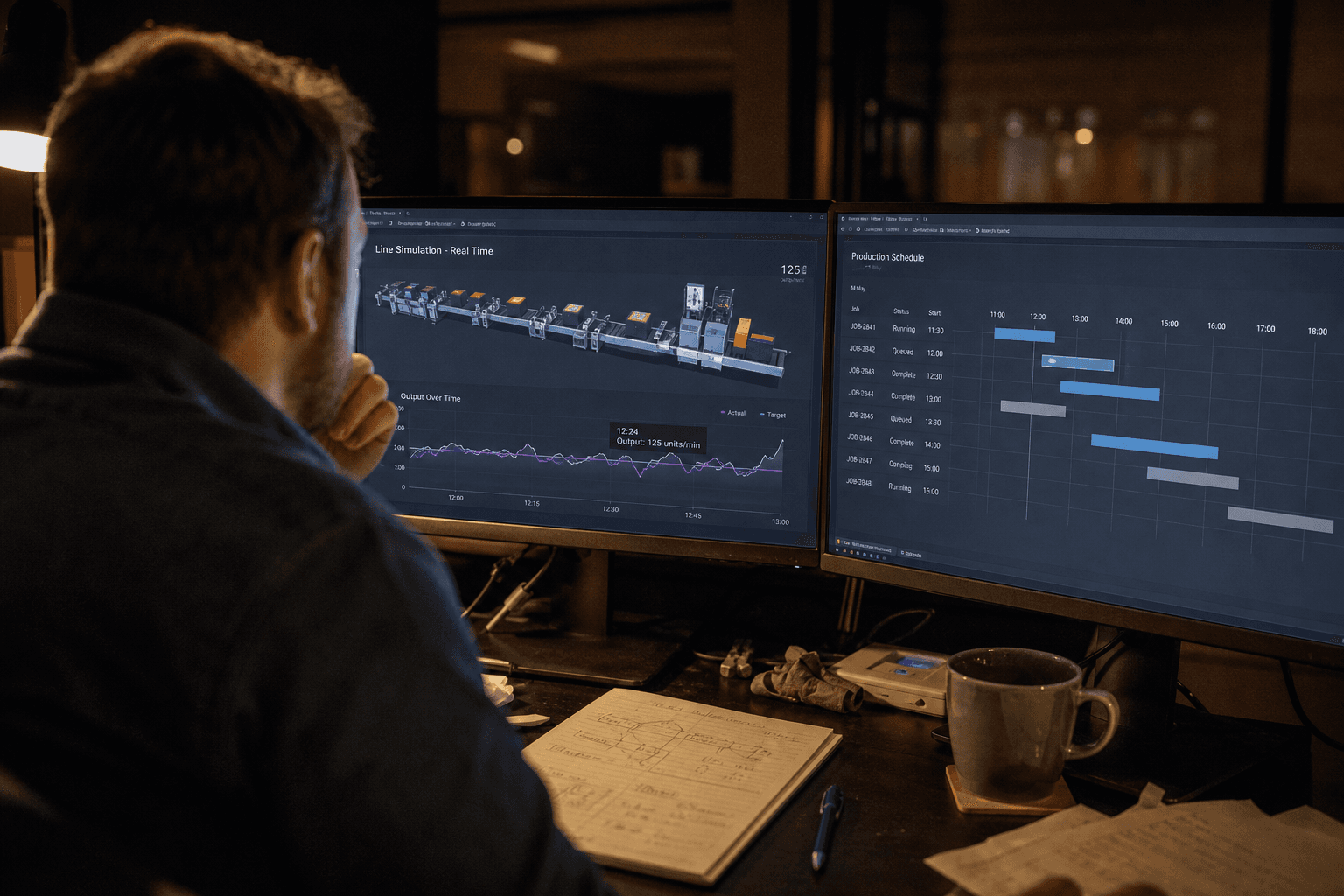
In practice, Australian manufacturers use twins to model "what if" scenarios: what happens to throughput if one machine's cycle time degrades, or if a supplier delay shifts input timing by a day. Logistics operators use twins of warehouses and networks to test layout changes, slotting strategies, or peak-season staffing plans without disrupting live operations. Because the twin is grounded in real sensor and system data, the simulation results are far more trustworthy than a spreadsheet model built on assumptions — though it's worth being honest that a twin's accuracy is only as good as the data feeding it, and early-stage twins should be treated as decision support, not ground truth, until they've been validated against real outcomes over time.
What data infrastructure and sensors are needed before a digital twin is viable?
A digital twin is viable once you have reliable, timestamped data flowing from the physical assets you want to model, a system to store and process that data at the required frequency, and integration between operational technology (OT) and IT systems. Most Australian manufacturers and logistics operators underestimate this stage — it typically takes longer than the simulation build itself.
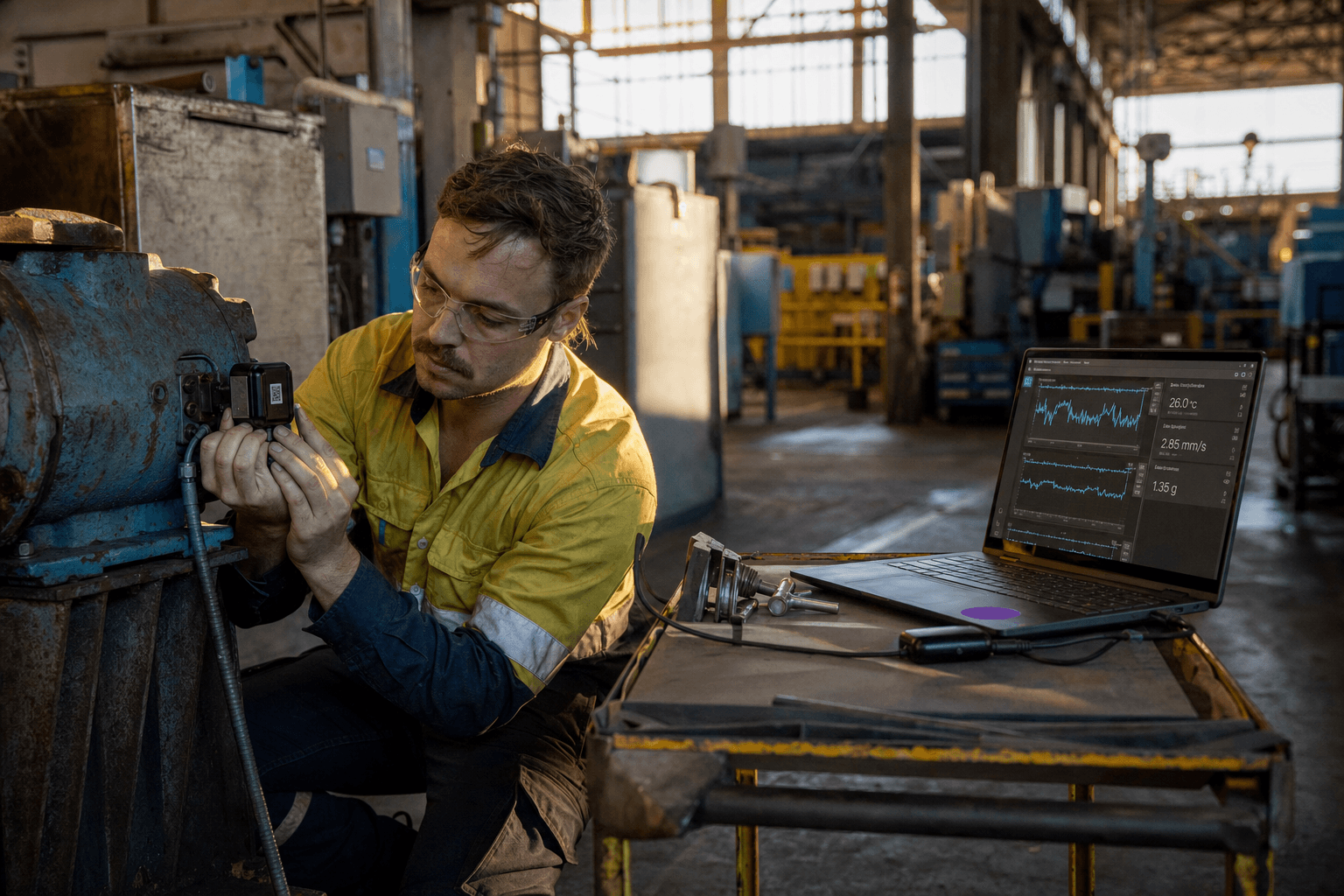
The practical requirements usually include:
- Sensor coverage: instrumentation on the machines, vehicles, or assets you want to twin — this may mean retrofitting older equipment with IoT sensors if it wasn't built with connectivity in mind, which is common in Australian manufacturing given the average age of the industrial equipment base.
- Reliable connectivity: a network (often a mix of wired, Wi-Fi, and cellular/LPWAN) that can move sensor data off the plant floor or warehouse reliably, including in environments with electrical interference or limited existing cabling.
- A data platform: somewhere to ingest, store, and structure time-series and event data so it can be queried by simulation and analytics tools, rather than sitting in disconnected historian systems. This is the layer most legacy manufacturers lack, and it's the same data infrastructure work that underpins any serious analytics or AI initiative.
- OT/IT integration: a way to connect operational technology (PLCs, SCADA, fleet telematics) with modern data and analytics systems, which often means modernising older, siloed control systems — see our thinking on the strangler fig pattern for approaching this incrementally rather than through a risky rip-and-replace.
- Data governance: clear ownership of data quality, since a simulation built on inconsistent or missing sensor readings will produce misleading results.
| Readiness stage | Typical state | What's needed to progress |
|---|---|---|
| No instrumentation | Manual logs, paper checklists, disconnected PLCs | Sensor retrofit, connectivity audit |
| Basic monitoring | Some sensors, dashboards, no historical modelling | Centralised data platform, time-series storage |
| Data-connected | Live data flowing, siloed by system | OT/IT integration, unified data model |
| Twin-ready | Structured, validated, real-time data available | Simulation model build, validation against real outcomes |
| Twin in production | Simulation actively informing operational decisions | Ongoing monitoring, model recalibration |
Is a digital twin the right starting point?
For many Australian manufacturers and logistics operators, a full digital twin is not the right first investment — the data foundation is. If sensor coverage is patchy, data is siloed across OT and IT systems, or there's no reliable way to store and query time-series data, that work needs to happen first regardless of whether a twin is the eventual goal. The good news is that this foundational investment pays off even if the twin project is deferred, because the same infrastructure supports predictive maintenance, demand forecasting, and other analytics use cases.
We typically recommend starting with a scoped assessment: which assets or processes would benefit most from simulation, what data already exists versus what needs to be captured, and what the realistic ROI horizon looks like given the required investment. This is the same disciplined approach we bring to AI product strategy work generally — identify where the value actually is before committing to the build.
How does AI fit into a manufacturing or logistics digital twin?
Once a digital twin has reliable data flowing into it, machine learning models can be layered on top to move from descriptive simulation to predictive and prescriptive insight — forecasting failure before it happens, or recommending the best operational adjustment rather than just modelling the outcome of a manually chosen one. This is genuinely valuable, but it's a second stage, not the first. Trying to bolt predictive AI onto a twin with unreliable or sparse data tends to produce confident-sounding but untrustworthy predictions, which is worse than no prediction at all.
Our AI engineering team builds these predictive layers once the underlying data infrastructure is solid enough to support them, with monitoring in place to catch model drift as operating conditions change. For more on the broader question of when a data-heavy initiative is genuinely ready for AI, our AI readiness assessment piece covers the diagnostic questions we ask before recommending any build.
Getting started
Digital twin projects succeed or stall based on the data and sensor foundation underneath them, not the sophistication of the simulation software. If you're evaluating whether your manufacturing or logistics operation is ready for this kind of investment, an honest assessment of your current sensor coverage, data infrastructure, and OT/IT integration will tell you more than any vendor demo. You can browse more of our thinking on related topics in our insights.
If you're exploring digital twin technology for your operations, we can help — starting with an assessment of where your data foundation actually stands today.
Chris Kerr
Partner at Horizon Labs, an AI product consultancy and venture studio. A commercially focused product and technology leader with 20+ years building and scaling digital platforms, teams, and businesses across SaaS, travel, eCommerce, logistics and transport, and digital marketing — operating at the intersection of product, engineering, and data. Writes about platform strategy, AI transformation, modern data ecosystems, and the operational discipline that separates AI demos from AI products.